
What's the Difference Between Corporate Tax and Income Tax Training?
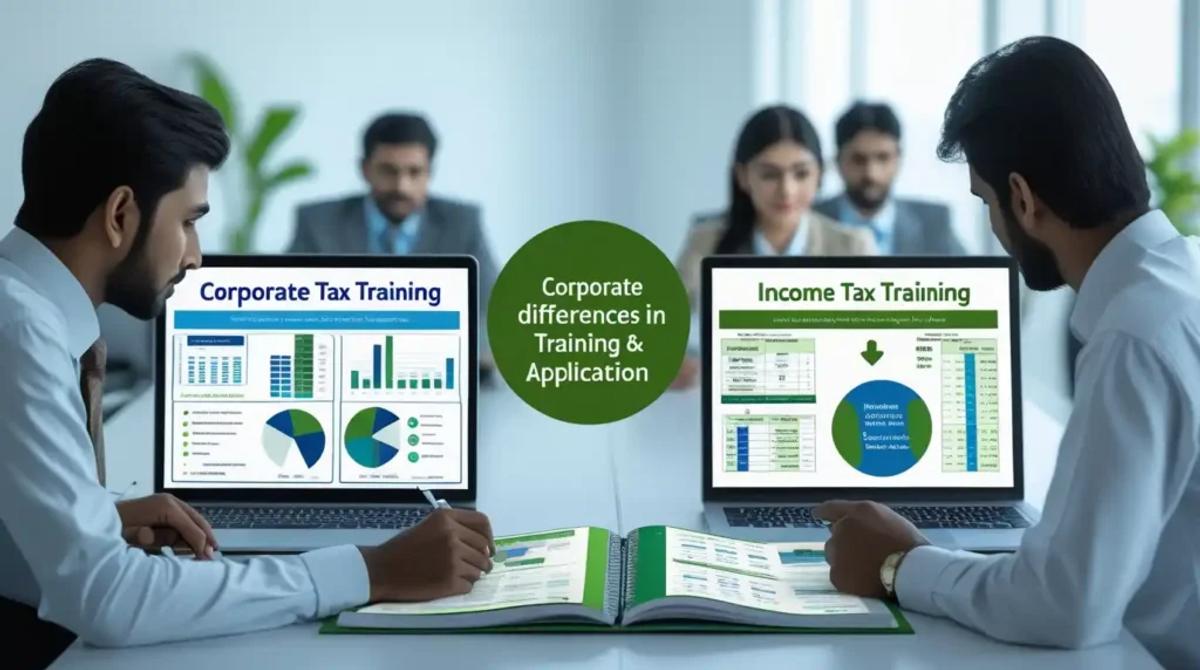
What's the Difference Between Corporate Tax and Income Tax Training?
Corporate tax training focuses on business entity taxation — including C-Corps, S-Corps, Form 1120, transfer pricing, and corporate tax planning. Income tax training covers individual tax returns, Form 1040, deductions, and personal tax filing. The key difference between corporate tax and income tax training is the audience, curriculum, and career outcomes each path prepares you for.
Introduction
If you've ever searched for a tax training program and found yourself confused by the options, you're not alone. Many aspiring tax professionals — and even experienced accountants — aren't sure whether to pursue corporate tax training or income tax training. Are they the same thing? Which one is right for your career goals?
The short answer: they're very different paths. And choosing the right one can completely change your career trajectory in the world of taxation and finance.
In this guide, we'll break down everything you need to know — from curriculum differences and career outcomes to certifications, tools, and how to enroll in the right program for you.
What Is Corporate Tax Training?
Corporate tax training is a specialized education program designed to teach professionals how businesses — particularly corporations, LLCs, and partnerships — are taxed under federal, provincial, and international tax laws.
Corporate tax courses are designed for accountants, finance managers, tax consultants, and business owners who need to manage or advise on business-level tax obligations. These programs go deep into topics that simply don't exist in personal income tax education.
A typical corporate tax training course covers:
- Business entity taxation (C-Corp, S-Corp, LLC, partnerships)
- Form 1120 and corporate tax return preparation
- Depreciation and amortization training
- Transfer pricing education for multinational companies
- Tax planning strategies for businesses
- Payroll tax training and withholding tax education
- Corporate tax audit preparation training
- Tax code compliance training
- International corporate tax training
In Pakistan, corporate tax training also includes FBR compliance, income tax ordinance 2001 provisions applicable to companies, corporate tax filing education, and understanding SROs and regulatory notifications. If you're working with businesses that file with FBR (Federal Board of Revenue), mastering corporate taxation is absolutely essential.
At the Institute of Corporate and Taxation (ICT), corporate tax training is structured to produce job-ready professionals who can handle real-world tax challenges for businesses of all sizes. ICT offers one of the most practical and career-focused advanced taxation courses in Pakistan.
What Is Income Tax Training?
Income tax training, on the other hand, focuses on individual and personal tax compliance. It's designed for people who want to prepare tax returns for salaried employees, freelancers, self-employed individuals, and small business owners filing as sole proprietors.
Income tax training is best suited for new tax preparers, HR professionals, freelancers, real estate professionals, and anyone entering the tax preparation industry at the individual level.
Core topics covered in income tax training include:
- Form 1040 preparation (US) or individual income tax return filing (Pakistan/FBR)
- Income tax slab rates and calculations
- Deductions and credits training
- Schedule C training for self-employed individuals
- Withholding tax and estimated tax payments
- Income tax on salary, rental income, and capital gains
- FBR filer status, NTN registration, and IRIS portal
- Federal income tax education and compliance
- Tax return filing deadlines and extension procedures
If you're looking to calculate your personal tax liability right now, you can use this free Pakistan Income Tax Calculator to get an instant estimate based on your income and applicable slabs.
Income tax training for beginners is widely available, and many programs — including those offered by ICT — are designed to take someone from zero knowledge to a fully certified tax preparer in a matter of weeks.
What Is the Difference Between Corporate Tax and Income Tax Training?
Here's the clearest breakdown you'll find anywhere:
Feature
Corporate Tax Training
Income Tax Training
Audience
Accountants, CPAs, finance managers, business owners
Individuals, new tax preparers, HR, freelancers
Forms Covered
Form 1120, corporate returns, FBR company filings
Form 1040, FBR individual returns, Schedule C
Complexity Level
Advanced
Beginner to Intermediate
Topics
Transfer pricing, depreciation, corporate structure
Salary slabs, personal deductions, filer status
Career Outcomes
Corporate tax analyst, tax consultant, CFO
Tax preparer, enrolled agent, FBR filer
Duration
3–6 months (comprehensive)
4–12 weeks
Certifications
CPA, ACCA, corporate tax specialist
EA, CTEC, PTIN, tax preparer certificate
Software Used
SAP, Oracle Tax, corporate ERP tools
Tax software, IRIS portal, FBR online portal
Cost Range
Higher (specialized content)
Affordable, widely accessible
The key difference between corporate and income tax training comes down to this: corporate tax deals with businesses as legal entities, while income tax training focuses on individuals and their personal tax obligations.
Who Needs Corporate Tax Training?
Corporate tax training is for you if you are:
- A CPA or accountant working with business clients
- A finance manager overseeing a company's tax strategy
- A business owner who wants to understand your tax obligations better
- A tax consultant advising corporations or multinationals
- An HR or payroll professional managing payroll taxes and withholding
- A startup founder trying to structure your business tax-efficiently
- Someone pursuing a career as a corporate tax specialist
For businesses that operate across multiple countries or deal with international transactions, corporate tax training with a focus on transfer pricing education and international corporate tax training is especially critical.
You can also check out ICT's Company Secretary Course if you're involved in corporate governance and want to combine legal and taxation knowledge for a more powerful professional profile.
Who Should Take Income Tax Training?
Income tax training is the right choice if you are:
- A fresh graduate entering the tax or accounting field
- A salaried employee who wants to file their own returns correctly
- A freelancer navigating self-employment taxes and FBR compliance
- A real estate professional dealing with property tax and capital gains
- A tax preparer building a career helping individuals file returns
- A small business owner operating as a sole proprietor
Pakistan has seen a massive push toward increasing the filer base, and with FBR's IRIS portal making online filing more accessible, income tax training has never been more relevant. Whether you're in Karachi, Lahore, Islamabad, or operating as a freelancer anywhere in Pakistan, understanding your personal income tax obligations is no longer optional.
Want to get a quick estimate of your business tax liability? Try this free Pakistan Business Tax Calculator before diving deeper into your training.
Certifications: What Can You Earn From Each Path?
Corporate Tax Certifications
- CPA (Certified Public Accountant) — the gold standard for corporate tax professionals in the US
- ACCA — widely recognized in Pakistan, UK, and internationally
- Corporate Tax Specialist Certificate — offered by institutions like ICT
- CA (Chartered Accountant) — highly valued in South Asia
Income Tax Certifications
- EA (Enrolled Agent) — authorized by the IRS, highly respected in the US
- CTEC (California Tax Education Council) — for California-based preparers
- PTIN (Preparer Tax Identification Number) — required for paid tax preparers in the US
- FBR Tax Preparer Certificate — increasingly recognized in Pakistan
If you're based in Pakistan and aiming for a professional edge in taxation, ICT's course catalog includes certifications that are practical, industry-recognized, and career-focused.
Career Outcomes and Salary Expectations
Corporate Tax Career Path
- Corporate Tax Analyst — PKR 80,000–150,000/month
- Tax Consultant (Corporate) — PKR 100,000–250,000/month
- Tax Manager — PKR 200,000–400,000/month
- CFO / Head of Finance — PKR 400,000+/month
Income Tax Career Path
- Tax Preparer — PKR 40,000–80,000/month
- FBR Tax Consultant — PKR 60,000–120,000/month
- Personal Tax Advisor — PKR 50,000–100,000/month
- Senior Tax Practitioner — PKR 100,000–200,000/month
The corporate tax path generally offers higher earning potential but requires deeper technical knowledge and often a formal accounting qualification. Income tax training offers a faster entry into the workforce with growing demand, especially as FBR continues expanding its tax net across Pakistan.
Online vs. In-Person Tax Training: Which Is Better?
Both formats have real advantages:
Online corporate tax training and income tax LMS courses offer flexibility, self-paced learning, and access to resources from anywhere in the world. Platforms like Coursera, AICPA, and ICT's own online programs make it possible to earn a tax certification without disrupting your work schedule.
In-person training, however, gives you direct mentorship, real-world case studies, and networking opportunities with industry professionals — something that's especially valuable in Pakistan's relationship-driven business environment.
At ICT, you can choose from both formats depending on your schedule and learning preference. Their instructors bring real industry experience to the classroom, making the training practical rather than purely theoretical.
Why Choose ICT for Tax Training in Pakistan?
The Institute of Corporate and Taxation (ICT) has built a strong reputation as one of Pakistan's most practical tax training institutions. Here's why students and professionals keep choosing ICT:
- Practical, job-ready curriculum aligned with FBR regulations and real business scenarios
- Expert instructors with hands-on experience in corporate and personal taxation
- Flexible learning options — online and in-person classes available
- Recognized certifications valued by employers across Pakistan
- Comprehensive course library covering everything from Master Sales Tax to Master Import and Export
- Career support to help graduates land tax and finance positions
Whether you're starting from scratch or upskilling to corporate tax level, ICT has a course designed for your exact stage of growth.
Frequently Asked Questions (FAQs)
Q1: What is the difference between corporate tax training and income tax training? Corporate tax training focuses on business entity taxation — covering corporations, partnerships, transfer pricing, and Form 1120. Income tax training covers individual returns, personal deductions, and Form 1040 or FBR individual filings. The audience, curriculum, and career paths are entirely different.
Q2: Is corporate tax training harder than income tax training? Yes, generally. Corporate tax training involves more complex concepts like depreciation, transfer pricing, international tax laws, and multi-entity structures. Income tax training is more accessible and ideal for beginners.
Q3: Can I take both corporate and income tax courses? Absolutely. Many tax professionals start with income tax training and later advance to corporate tax training. Taking both gives you a comprehensive skill set and broader career opportunities.
Q4: How long does corporate tax training take? Most corporate tax training programs run between 3 to 6 months, depending on depth and format. Income tax training can be completed in as little as 4 to 12 weeks.
Q5: What certifications are available for income tax training? Common certifications include EA (Enrolled Agent), CTEC, PTIN, and FBR Tax Preparer Certificate. For corporate tax, look for CPA, ACCA, CA, or a corporate tax specialist certificate.
Q6: Do I need a degree to enroll in corporate tax training? Not always. While a background in accounting or finance helps, many institutions — including ICT — welcome motivated learners without a formal degree, especially for foundational courses.
Conclusion
Choosing between corporate tax training and income tax training isn't about which is better — it's about which one aligns with your career goals, your current skill level, and the clients or employers you want to serve.
If you want to work with businesses, multinationals, or climb toward senior finance roles, corporate tax training is your path. If you want to build a steady client base helping individuals and small businesses stay compliant, income tax training is the perfect starting point.
Either way, getting properly trained is no longer optional in today's tax environment — especially in Pakistan, where FBR compliance requirements are tightening and employers are actively seeking qualified tax professionals.
Ready to take the next step? Book a seat in the Advanced Taxation Course offered by ICT — one of Pakistan's most trusted tax training institutions. Visit ICT today and explore the course that fits your ambitions.
Your tax career doesn't start when you get hired. It starts the moment you choose the right training.
Comments (0)
No comments yet. Start the conversation!
Leave a Reply
Your email address will not be published. Required fields are marked *