
Why Students Prefer ICT for Legal Training
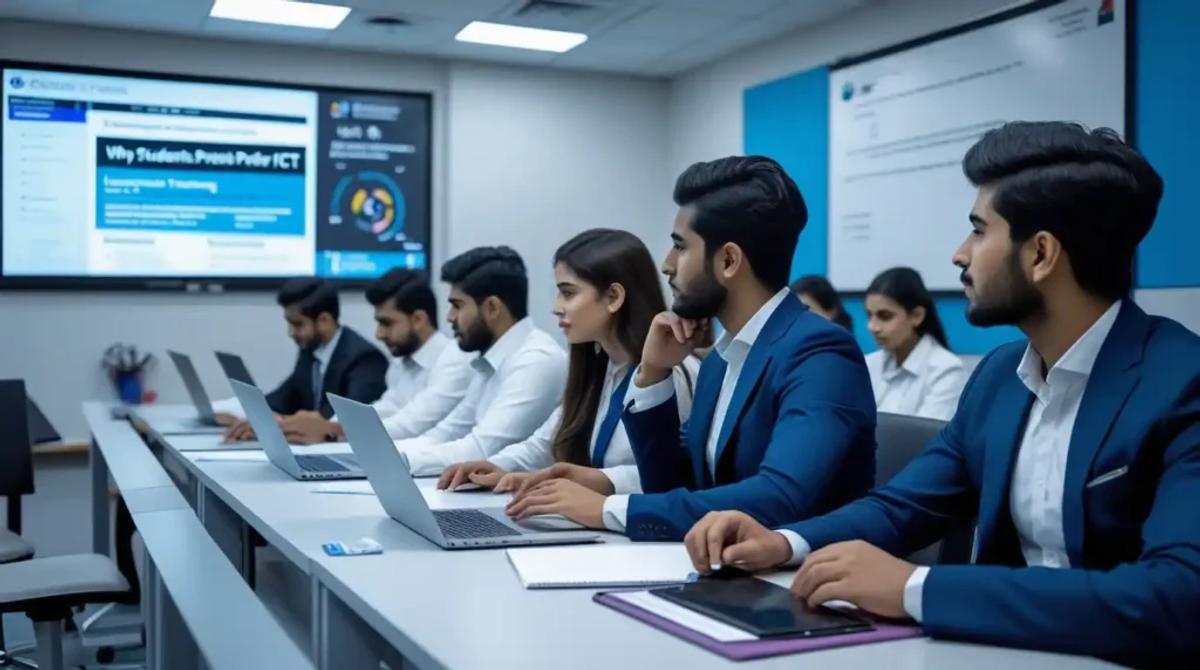
Looking for the best institute for legal and taxation training in Pakistan? Thousands of students are choosing the Institute of Corporate and Taxation (ICT) — and for very good reasons.
If you are a law graduate, taxation professional, or corporate aspirant trying to decide where to build your career skills, this guide explains exactly why ICT has become the most trusted name for legal and professional training in Pakistan. From world-class course design to real-world practical learning, ICT is not just an institute — it is a career launchpad.
What Is ICT — Institute of Corporate and Taxation?
The Institute of Corporate and Taxation (ICT) is one of Pakistan's most respected professional training institutes, specializing in taxation law, corporate compliance, import-export regulations, and company secretarial practice.
ICT was established with a clear mission — to bridge the gap between academic knowledge and practical professional skills. While universities teach theory, ICT teaches what actually happens in the real world of taxation, corporate law, and legal compliance.
Students who complete their training at ICT do not just earn a certificate. They walk away with job-ready skills, practical confidence, and a professional network that opens doors across Pakistan's legal and corporate sectors.
To learn more about the institute's background, faculty, and mission, visit the About ICT page.
Why Do Students Choose ICT for Legal and Taxation Training?
This is the question every prospective student asks. With so many institutes claiming to offer professional courses, what makes ICT genuinely different?
The answer comes down to five core reasons that students consistently highlight when they talk about their experience at ICT.
1. Practical, Market-Oriented Curriculum
ICT does not teach outdated textbook content. Every course at ICT is designed around what employers, law firms, corporate offices, and government bodies actually need from professionals today.
When you study taxation at ICT, you learn how FBR portals work, how to file returns, how to handle audits, and how to advise clients on tax planning — not just how to define tax in theory.
This practical, market-oriented approach is the single biggest reason students prefer ICT over traditional academic programs.
2. Expert Faculty with Real-World Experience
One of the most common complaints students have about university education in Pakistan is that their teachers have never actually worked in the field they are teaching. ICT solves this problem directly.
ICT's faculty includes practicing taxation lawyers, chartered accountants, company secretaries, and corporate compliance professionals who bring real cases, real challenges, and real solutions into the classroom. When your instructor has personally handled hundreds of FBR cases or managed corporate filings for major companies, the learning quality is completely different.
3. Courses Designed for Career Success
ICT offers a carefully selected portfolio of professional courses, each one targeting a high-demand area of Pakistan's legal and corporate landscape. You can explore the full range at ICT Courses.
The flagship programs that students consistently choose include:
Master Sales Tax Course This is one of the most in-demand courses in Pakistan right now. With FBR tightening its grip on sales tax compliance and businesses facing increasing scrutiny, professionals who understand sales tax law inside and out are extremely valuable. The Master Sales Tax Course at ICT covers everything from sales tax registration and return filing to audit handling and legal compliance — with hands-on portal training included.
Master Import and Export Course Pakistan's trade sector is growing, and so is the demand for professionals who understand customs law, import-export documentation, and international trade regulations. The Master Import and Export Course at ICT prepares students to handle the full legal and procedural side of trade transactions, making graduates highly employable in trading companies, customs agencies, and multinational corporations.
Company Secretary Course Corporate governance in Pakistan is becoming more structured and regulated. Companies registered with SECP need qualified company secretaries who understand corporate law, filing requirements, board governance, and compliance procedures. The Company Secretary Course at ICT is the most comprehensive program of its kind available outside of a full university degree — and it gets students job-ready in a fraction of the time.
4. Recognized Certifications That Employers Trust
A certificate only has value if the employer on the other side of the interview table recognizes and respects it. ICT certifications have built a strong reputation across Pakistan's legal, corporate, and taxation sectors.
Graduates of ICT programs are working at leading law firms, Big Four accounting firms, FBR, SECP, multinational corporations, and as independent consultants. This track record of graduate success is what has built ICT's reputation — and it is what gives students confidence when they enroll.
5. Affordable, Accessible, and Time-Efficient Training
University degrees take three to five years and cost hundreds of thousands of rupees. ICT courses deliver specialized, professional-level knowledge in weeks or months — at a fraction of the cost and time investment.
For students who have already completed their law or commerce degree and want to add a high-value specialization quickly, ICT is the most efficient path available. For fresh graduates entering a competitive job market, ICT certification gives an immediate edge that a degree alone cannot provide.
Who Should Enroll at ICT?
ICT's programs are designed for a wide range of students and professionals:
- Law graduates looking to specialize in taxation law, corporate compliance, or trade law
- Commerce and business students who want practical taxation and corporate skills
- Working professionals in accounting, finance, or legal fields looking to upskill
- Entrepreneurs and business owners who want to understand their own tax and corporate compliance obligations
- Paralegals and legal assistants who want to increase their value in the workplace
- Fresh graduates who want to stand out in a competitive job market immediately
If you fall into any of these categories, ICT has a course that will directly advance your career.
Real-World Skills Students Gain at ICT
What separates ICT from other institutes is the depth of practical knowledge students walk away with. Here is a snapshot of the real-world skills ICT graduates possess:
- Filing and managing sales tax returns through FBR's IRIS portal
- Preparing and reviewing import-export documentation for customs clearance
- Drafting company resolutions, minutes, and statutory filings for SECP
- Understanding withholding tax obligations and how to handle tax audits
- Advising clients on legal tax planning strategies within Pakistani law
- Managing corporate governance structures and board compliance requirements
These are not theoretical concepts. These are billable skills that employers and clients pay for directly.
ICT and the Digital Legal Landscape in Pakistan
Pakistan's legal and taxation environment is becoming increasingly digital. FBR has moved to online filing systems. SECP manages corporate registrations and filings through its online portal. Courts in major cities including Lahore and Karachi are adopting digital case management tools.
ICT prepares its students to operate confidently in this digital environment. Understanding how to use government portals, digital documentation systems, and online compliance platforms is built into ICT's curriculum — not treated as an optional extra.
For students working with taxation matters, practical tools like the Pakistan Income Tax Calculator, the Pakistan Business Tax Calculator, and the Pakistan Freelance Tax Calculator are useful supplementary resources that complement the in-depth training provided at ICT.
Career Opportunities After Completing ICT Courses
One of the most important questions any student asks before enrolling in a professional course is simple — where will this take me?
ICT graduates have gone on to build successful careers across multiple high-growth sectors:
Taxation and FBR Practice Taxation lawyers and consultants are among the most in-demand professionals in Pakistan. With FBR expanding its tax net and businesses facing more complex compliance obligations every year, ICT-trained taxation professionals are finding excellent opportunities at tax consultancy firms, law firms, and as independent practitioners.
Corporate Legal Practice Company secretaries and corporate compliance officers are needed by every registered company in Pakistan. ICT's Company Secretary Course opens doors at corporations, listed companies, and SECP-regulated entities.
Import and Export Industry Pakistan's trade sector needs professionals who understand the legal, regulatory, and documentation side of international trade. ICT graduates in this area are working at trading houses, shipping companies, freight forwarders, and customs clearing agencies.
Independent Consulting Many ICT graduates go on to establish their own tax consultancy or corporate services practice. The practical skills and professional credibility gained at ICT provide a solid foundation for entrepreneurship in the legal and taxation services sector.
What Students and Professionals Say About ICT
The strongest evidence of any institute's quality is the success of its graduates. ICT has built a community of professionals across Pakistan who credit their ICT training as the turning point in their careers.
Students consistently highlight three things about their ICT experience: the quality and real-world relevance of the teaching, the immediate applicability of what they learn, and the professional confidence they gain from training alongside peers who are serious about their careers.
This culture of serious, career-focused learning is something ICT has deliberately cultivated — and it shows in the quality of the professionals the institute produces.
How to Enroll at ICT
Getting started at ICT is straightforward. Visit the ICT Courses page to browse the full range of available programs and find the one that matches your career goals.
If you have questions about which course is right for you, the admissions and advisory team at ICT is ready to help. Reach out directly through the ICT Contact page and get personalized guidance on your next step.
Frequently Asked Questions (FAQs)
What is the Institute of Corporate and Taxation (ICT)? ICT is a leading professional training institute in Pakistan that specializes in taxation law, corporate compliance, import-export regulations, and company secretarial practice. It offers practical, market-oriented courses designed to make graduates immediately employable.
Why should law students choose ICT for professional training? ICT offers practical, real-world training taught by experienced professionals. Its certifications are recognized across Pakistan's legal and corporate sectors, and its courses are specifically designed to fill the skills gap that university education leaves behind.
Which ICT course is best for law graduates? Law graduates most commonly benefit from the Master Sales Tax Course for taxation practice, the Company Secretary Course for corporate law, and the Master Import and Export Course for trade law. All are available at ict.net.pk/courses.
How long do ICT courses take to complete? ICT courses are designed to be intensive and time-efficient. Most programs can be completed in a matter of weeks to a few months, making them ideal for students and working professionals who cannot commit to multi-year degree programs.
Are ICT certifications recognized by employers in Pakistan? Yes. ICT certifications are well-recognized by law firms, accounting firms, corporate legal departments, FBR, and SECP-regulated organizations across Pakistan. The institute's track record of graduate success is its strongest endorsement.
Can I enroll at ICT while completing my law degree? Absolutely. ICT courses are structured to be accessible for students who are still completing their formal education. Many law students enroll at ICT in their final year to ensure they graduate with both a degree and a recognized professional certification.
Conclusion — Your Legal Career Starts at ICT
The legal and taxation profession in Pakistan is more competitive than ever. A law degree opens the door — but practical, specialized training is what gets you hired, promoted, and respected.
The Institute of Corporate and Taxation has spent years building a reputation as the place where serious legal and taxation professionals are made. Its courses are practical, its faculty are experienced, and its graduates are working at the top of their fields across Pakistan.
If you are ready to take your legal career seriously, there is no better place to start than ICT.
Explore all available courses at ICT today, choose the program that matches your ambition, and book your seat before the next intake fills up.
Your career will thank you for it.
Contact ICT now — and take the step that changes everything.
Comments (0)
No comments yet. Start the conversation!
Leave a Reply
Your email address will not be published. Required fields are marked *