
FBR Launches New Digital Invoicing System in 2026
Introduction: Pakistan's Biggest Tax Reform in Decades
Pakistan's tax landscape has officially entered a new era. The Federal Board of Revenue (FBR) has launched its long-awaited Digital Invoicing System in 2026, marking the most significant reform in the country's taxation history. Whether you run a manufacturing unit in Faisalabad, a distribution company in Lahore, or a retail business in Karachi — this change affects every registered taxpayer in Pakistan.
The FBR e-Invoicing system isn't just about digitizing paperwork. It's about creating a real-time, centralized invoice validation ecosystem that gives the government a live view of every business transaction — dramatically cutting tax evasion and improving revenue collection across the country.
In this comprehensive guide, we'll walk you through exactly what the FBR Pakistan Digital Invoicing System 2026 is, who it affects, how to register, and how institutions like the Institute of Corporate & Taxation (ICT) are helping businesses and tax professionals stay ahead of the curve.
What Is the FBR Digital Invoicing System?
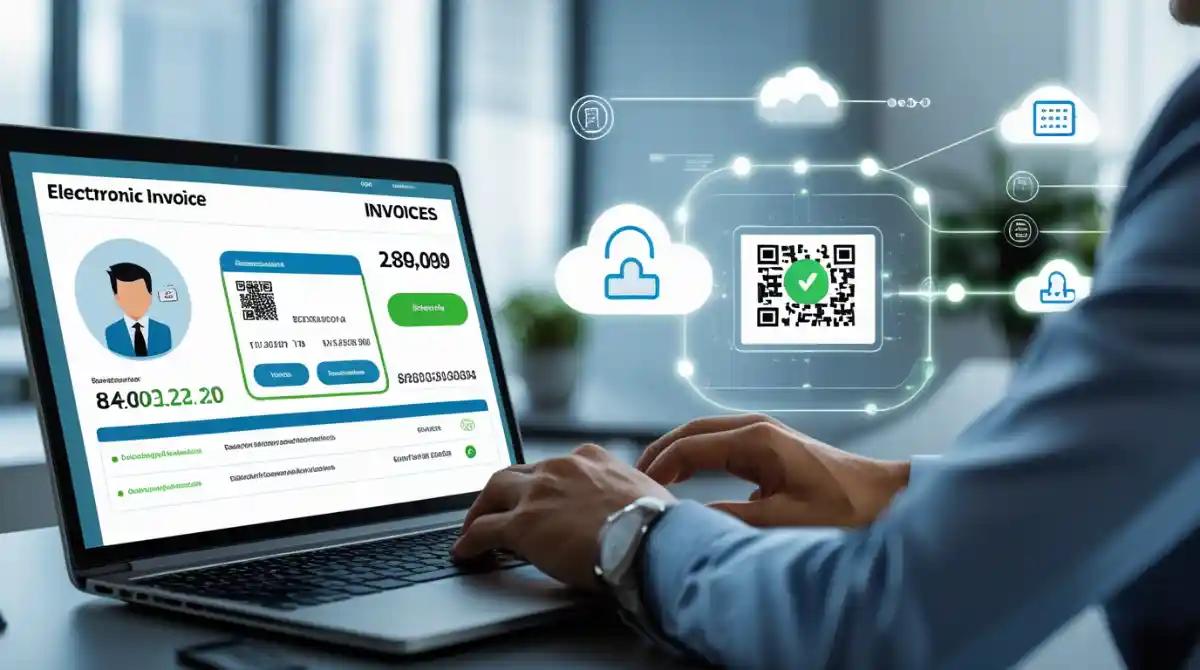
The FBR Digital Invoicing System — also called FBR e-Invoicing — is a government-mandated electronic invoicing platform that requires businesses to generate and transmit invoices digitally to FBR's central server in real-time. Every invoice issued must carry a unique FBR Invoice Reference Number (IRN) and a QR code for instant verification.
Under this system, a business cannot simply issue a receipt or sales tax invoice without it being authenticated and registered in FBR's centralized database. This applies to B2B (business-to-business) and B2C (business-to-consumer) transactions alike.
How Does FBR Digital Invoicing Work?
Here is a simple step-by-step breakdown of how the FBR e-invoicing process works:
- Business generates an invoice in their accounting or ERP software.
- Invoice data is sent electronically to FBR's central portal via API integration.
- FBR's system validates the invoice in real-time and assigns a unique Invoice Reference Number (IRN).
- A digitally signed invoice with a QR code is returned to the seller.
- The buyer can scan the QR code to verify authenticity instantly.
- Invoice data is archived automatically in FBR's secure database for audit trails.
The FBR digital invoicing system works by connecting businesses' ERP or accounting software to FBR's central portal via API. Each invoice is validated in real-time, receives a unique reference number and QR code, and is archived automatically — eliminating manual processes and preventing tax fraud.
Why the FBR Digital Invoicing System Matters for Pakistan
Pakistan has long struggled with a narrow tax base and rampant tax evasion. According to the Federal Board of Revenue, undocumented transactions cost the national treasury billions of rupees every year. The FBR Electronic Invoicing System is specifically designed to close this gap.
Key Benefits of FBR Digital Invoicing for Pakistan
- Tax Evasion Prevention: Every transaction is recorded in real-time — there's no way to hide sales from the tax authority.
- Faster Tax Compliance: Automated invoice submission replaces tedious manual filing, saving businesses hours of administrative work.
- Reduced Human Error: Digital systems eliminate calculation mistakes and data entry errors that are common in paper-based invoicing.
- FBR Audit Readiness: Businesses always have a complete, verifiable digital invoice trail — making income tax audits and sales tax audits far less stressful.
- Stronger Business Credibility: Companies compliant with FBR's digital invoicing system are seen as more trustworthy by banks, investors, and partners.
- Real-Time Tax Reporting: FBR can now monitor business activity in real-time, enabling smarter policy decisions and targeted enforcement.
Is FBR Digital Invoicing Mandatory in 2026?
Yes, absolutely. The FBR has made the Digital Invoicing System mandatory for all registered sales tax businesses under the Finance Act 2025 and the relevant SRO (Statutory Regulatory Order). All businesses registered with FBR for sales tax are required to comply — with phased implementation beginning from large taxpayer units before rolling out to medium and small enterprises.
Who Needs to Register for FBR e-Invoicing?
The following categories of businesses must comply with the FBR Digital Invoicing mandate:
- Large Taxpayer Units (LTUs): Already in the first phase of mandatory compliance.
- FMCG Manufacturers & Distributors: Covered under FBR's phased rollout for the consumer goods sector.
- Pharmaceutical Companies: Required to integrate under the healthcare sector mandate.
- Textile Industry Businesses: One of Pakistan's largest export sectors, now included in the FBR e-invoicing framework.
- Wholesale and Retail Businesses: All registered sales tax businesses issuing invoices above the threshold must comply.
- Importers and Exporters: FBR has specifically targeted import-export businesses to close cross-border tax leakages.
- Service-Based Businesses: IT firms, consultancies, and other service providers registered with FBR are also included.
⚠️ Important Note: Businesses in Karachi, Lahore, Islamabad, Rawalpindi, Peshawar, Faisalabad, Multan, Sialkot, Quetta, Gujranwala, and Hyderabad are all required to comply with FBR digital invoicing if they are registered for sales tax. There are no city-specific exemptions.
How to Register for FBR Digital Invoicing System: Step-by-Step Guide
Registering for the FBR e-Invoicing portal is straightforward if you follow these steps:
Step 1: Ensure Your FBR Registration is Active
Before you can register for digital invoicing, your FBR NTN (National Tax Number) and Sales Tax Registration Number (STRN) must be active on the FBR IRIS 2.0 portal. You can verify your status at fbr.gov.pk.
Step 2: Choose a FBR Certified Integrator
You'll need to integrate your business system with FBR's central portal through an FBR-certified third-party integrator. Pakistan Revenue Automation Limited (PRAL) is the primary government integration partner, but FBR has also approved private technology providers like Haball and others. Choose based on your ERP compatibility and business size.
Step 3: Integrate Your ERP or Accounting Software
Your ERP system (SAP, Oracle, QuickBooks, Microsoft Dynamics, or local Pakistani software) must be configured to send invoice data in the FBR-required JSON or XML format via FBR's API endpoints. Your integrator will provide technical documentation and sandbox testing access.
Step 4: Test in FBR's Sandbox Environment
Before going live, test your integration in FBR's sandbox environment to ensure invoices are being generated, transmitted, and validated correctly. Fix any API errors or validation issues flagged by FBR's system.
Step 5: Go Live and Start Generating Digital Invoices
Once testing is successful, activate your integration. From this point on, every invoice your business issues must pass through the FBR digital invoicing system to receive a valid Invoice Reference Number (IRN) and QR code. Non-compliant invoices will be considered invalid for sales tax credit purposes.
What Are the Penalties for Not Using FBR Digital Invoicing?
FBR has made it abundantly clear that non-compliance will attract serious consequences. Here are the key penalty provisions you need to know:
Violation
Penalty / Consequence
Failure to integrate with FBR e-invoicing system
Substantial financial penalties under Finance Act 2025
Issuing invoices without valid FBR reference number
Invoices deemed invalid — no sales tax credit allowed
Underreporting transactions
Tax audit, additional tax, and possible prosecution
Failure to display QR code on invoices
Notices and fines from FBR enforcement teams
Repeated non-compliance
Business de-registration from FBR active taxpayer list
To avoid these consequences, businesses should act immediately. If you're unsure about your obligations, consider enrolling in a Certified Tax Advisor course at ICT to get expert guidance tailored to Pakistan's evolving tax laws.
Tools to Help You Calculate Your Tax Compliance Costs
Understanding the financial impact of FBR compliance is crucial for business planning. Use these free tools to estimate your tax obligations:
- Pakistan Business Tax Calculator — Calculate your corporate and business tax instantly.
- Pakistan Income Tax Calculator — Estimate personal and business income tax liability.
- Pakistan Freelance Tax Calculator — Perfect for IT freelancers and self-employed professionals navigating FBR compliance.
FBR POS System vs FBR Digital Invoicing: What's the Difference?
Many business owners confuse the FBR POS (Point of Sale) integration with the new FBR Digital Invoicing System. Here's a clear comparison:
Feature
FBR POS System vs FBR Digital Invoicing
FBR POS System
Designed for retail businesses with physical sales counters
FBR Digital Invoicing
Covers all registered businesses — B2B, B2C, FMCG, services, manufacturing
Scope
POS focuses on point-of-sale transactions; Digital Invoicing covers the full supply chain
Integration
POS uses fiscal registers; Digital Invoicing uses API/ERP integration
Invoice Type
POS issues simplified receipts; Digital Invoicing issues full tax invoices with IRN
In short, the FBR Digital Invoicing System is a far broader, more comprehensive framework that covers the entire invoice lifecycle — from generation to archiving.
Technical Requirements for FBR Digital Invoicing Integration
For IT teams and developers handling FBR integration, here's what you need to know:
- API Format: FBR supports JSON and XML invoice formats for real-time data transmission.
- Digital Signature: Every invoice must carry a valid digital signature compliant with FBR's encryption standards.
- QR Code Generation: The IRN must be encoded in a scannable QR code printed or displayed on every invoice.
- ERP Compatibility: SAP, Oracle, Microsoft Dynamics, QuickBooks, and approved local ERPs are compatible.
- Sandbox Testing: FBR provides a test environment for integration validation before going live.
- PRAL Support: Pakistan Revenue Automation Limited (PRAL) provides technical support for government integrations.
- Invoice Archiving: All invoices must be stored in FBR's central archive for a minimum defined period for audit purposes.
Stay Ahead: Learn FBR Compliance with ICT
The FBR Digital Invoicing System 2026 has created an enormous demand for trained tax and business professionals who understand both the legal requirements and technical implementation of Pakistan's new e-invoicing framework. This is where the Institute of Corporate & Taxation (ICT) steps in as Pakistan's leading professional training institution for taxation and business advisory.
Courses Offered by ICT for Tax Professionals
- Certified Tax Advisor Course — Master FBR compliance, sales tax, income tax, and digital invoicing regulations in Pakistan. Ideal for tax practitioners, accountants, and business owners.
- Certified Business Advisor Course — Learn to advise SMEs and corporations on navigating FBR's new digital tax landscape, including e-invoicing integration and compliance strategies.
ICT's courses are designed by practicing tax professionals with deep knowledge of FBR regulations, Finance Act provisions, and real-world business compliance. Whether you're a student, accountant, consultant, or business owner — ICT has a course for you.
Explore all ICT courses or contact ICT directly to discuss which program suits your career goals.
Frequently Asked Questions (FAQs) — FBR Digital Invoicing System 2026
Q: What is the FBR digital invoicing system?
A: The FBR Digital Invoicing System is Pakistan's new mandatory electronic invoicing platform that requires all registered businesses to generate and submit invoices through FBR's central portal in real-time. Each invoice receives a unique Invoice Reference Number (IRN) and QR code for verification.
Q: Is FBR digital invoicing mandatory in 2026?
A: Yes. FBR digital invoicing is mandatory for all registered sales tax businesses in Pakistan. Implementation is phased — starting with Large Taxpayer Units (LTUs) and major sectors like FMCG, pharmaceuticals, and textiles, before extending to SMEs.
Q: What are the penalties for not using FBR e-invoicing?
A: Non-compliance can result in financial penalties, invalidation of sales tax invoices (meaning buyers cannot claim input tax credit), FBR audit notices, de-registration from the active taxpayer list, and in severe cases, legal prosecution under the Finance Act.
Q: How do I register for the FBR digital invoicing system?
A: First, ensure your NTN and STRN are active on FBR IRIS 2.0. Then, choose an FBR-certified integrator (such as PRAL or an approved private provider), integrate your ERP or accounting software via API, test in the FBR sandbox, and go live to start issuing compliant digital invoices.
Q: What is the difference between FBR POS system and digital invoicing?
A: The FBR POS system targets retail point-of-sale transactions, while FBR Digital Invoicing covers the entire business invoicing lifecycle — including B2B, B2C, manufacturing, FMCG, and services. Digital invoicing is broader in scope and uses full API/ERP integration.
Q: Can small businesses use the FBR digital invoicing system?
A: Yes. While the initial mandate targets large taxpayers, FBR has designed the digital invoicing system to be scalable for small and medium-sized businesses too. SMEs can use affordable cloud-based ERP integrations or seek help from FBR-certified integrators for a smooth transition.
Q: What ERP systems are compatible with FBR digital invoicing?
A: FBR's digital invoicing system is compatible with major ERP platforms including SAP, Oracle, Microsoft Dynamics, QuickBooks, and several approved local Pakistani accounting software solutions. Your integrator can help configure the correct API connection and invoice format (JSON/XML).
Q: How does FBR digital invoicing reduce tax evasion?
A: By capturing every invoice in a centralized real-time database, FBR can cross-match declared sales with actual transaction volumes. Hidden sales, ghost invoices, and understated turnover become nearly impossible — directly increasing tax compliance and revenue collection.
Conclusion: Act Now — FBR Digital Invoicing Is Not Optional
The FBR Digital Invoicing System 2026 is not just another regulation update — it is a fundamental transformation of how business is done in Pakistan. From Karachi's trading hubs to Sialkot's export factories and Islamabad's corporate offices, every registered business must now rethink its invoicing process.
The good news? With the right knowledge and tools, compliance is not complicated. Businesses that act early will avoid penalties, build stronger financial credibility, and position themselves as transparent, trustworthy organizations in Pakistan's growing digital economy.
The question isn't whether you need to comply — it's how quickly you can get there.
📚 Ready to Master FBR Tax Compliance?
Book your seat in ICT's Advanced Taxation Course — Pakistan's most trusted program for tax professionals, accountants, and business owners navigating FBR's new digital tax era.
👉 Enroll in Certified Tax Advisor Course at ICT