
How to Become a Filer in Pakistan – Step by Step Guide (2026)
Introduction
If you've ever been charged extra tax on a bank transaction, a property deal, or a car purchase — and wondered why — the answer is simple: you're a non-filer. In Pakistan, the difference between a filer and a non-filer isn't just a technicality. It directly affects how much tax you pay, what financial transactions you can make, and how the government sees you as a citizen.
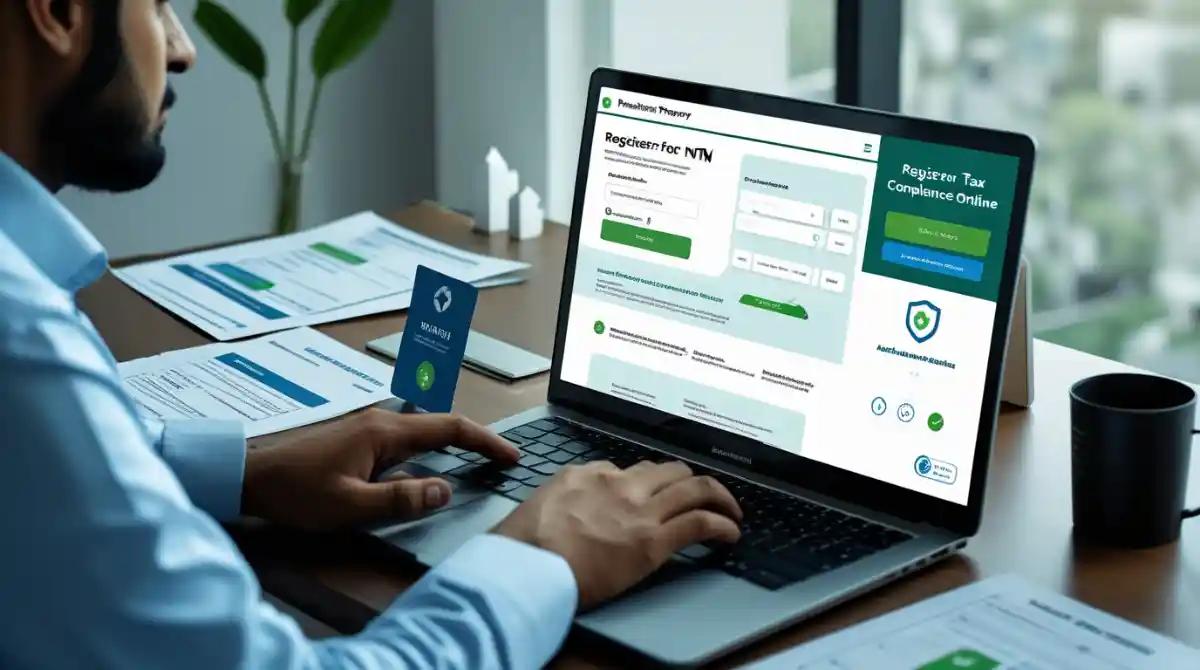
The good news? Becoming a tax filer in Pakistan is easier than most people think — and the benefits are very real. Whether you're a salaried professional, a freelancer, a student, or an overseas Pakistani, this step-by-step guide for 2026 will walk you through exactly how to become a filer in Pakistan using the FBR IRIS portal — quickly, correctly, and without confusion.
What Is a Filer in Pakistan?
A filer in Pakistan is a person who is registered with the Federal Board of Revenue (FBR) and has filed their income tax return for the most recent tax year. Once FBR processes your return and adds your name to the Active Taxpayer List (ATL), you officially become an active tax filer.
A non-filer, on the other hand, is someone who either hasn't registered with FBR, hasn't filed their tax return, or whose name doesn't appear on the ATL.
The distinction matters enormously. Pakistan's tax system imposes significantly higher withholding tax rates on non-filers across dozens of transactions — from banking withdrawals to property purchases to vehicle registration. Being a filer literally saves you money every single day.
What Is the Difference Between a Filer and Non-Filer in Pakistan?
Here's a quick comparison to show you exactly why filer status matters:
Transaction Filer Tax Rate Non-Filer Tax Rate
Bank cash withdrawal 0.6% 0.15%
Property purchase 2% 4%
Vehicle registration Lower Higher
Dividend income 15% 30%
Prize winnings 15% 30%
Profit on debt/savings 15% 30%
The numbers speak for themselves. As a non-filer, you're paying double — sometimes even more — on the same transactions. Becoming a filer is one of the smartest financial decisions you can make in Pakistan right now.
Who Is Eligible to Become a Filer in Pakistan?
Almost every adult Pakistani resident can — and should — become a filer. This includes:
- Salaried employees earning above the taxable threshold
- Freelancers and self-employed professionals earning income from local or international clients
- Business owners — sole traders, partners, and company directors
- Students who have any source of income or want to build their financial profile early
- Overseas Pakistanis who own property or have financial interests in Pakistan
- Landlords receiving rental income
- Anyone who wants to access lower withholding tax rates and full financial freedom
Even if your income falls below the taxable threshold, filing a return is still recommended. It keeps you on the ATL, gives you access to lower tax rates, and builds your financial credibility over time.
Benefits of Being a Filer in Pakistan
Before diving into the process, let's be clear about exactly what you gain by becoming a tax filer in Pakistan:
Lower Withholding Tax Rates — You pay significantly reduced tax on banking transactions, property deals, vehicle purchases, and investment income. Over a lifetime, this adds up to hundreds of thousands of rupees in savings.
Property Purchase and Sale Rights — Non-filers face restrictions and higher taxes on property transactions. Filers enjoy smooth, lower-cost deals.
Vehicle Registration Benefits — Registering a new car costs considerably more as a non-filer. Filers get access to lower rates, especially for vehicles above 1000cc.
Business Credibility — If you're running a business, being a filer adds legitimacy to your operations and makes it easier to open business accounts, apply for loans, and work with corporate clients.
Legal Protection — Filing your return protects you from FBR notices, penalties, and legal action. It demonstrates transparency and compliance.
Freelancer Advantages — If you're earning foreign remittances through platforms like Upwork, Fiverr, or Toptal, being a filer helps you properly declare your income and stay compliant. Use the Pakistan Freelance Tax Calculator to estimate how much you might owe before filing.
How to Become a Filer in Pakistan – Step by Step (2026)
Here is the complete, updated process for becoming an active tax filer in Pakistan through the FBR IRIS portal in 2026.
Step 1: Get Your NTN Number (National Tax Number)
Your first step is obtaining an NTN (National Tax Number) from FBR. This is your unique tax identity in Pakistan.
To register:
- Visit the official FBR portal at www.fbr.gov.pk
- Click on "IRIS" — FBR's online tax portal
- Click "Registration for Unregistered Person"
- Enter your CNIC number as your username
- Fill in your personal details: name, address, phone number, email, and source of income
- Submit the form and wait for FBR to issue your NTN
For most individuals, the NTN is automatically linked to your CNIC. Once registered, you'll receive login credentials for the IRIS portal.
Important: Keep your email and phone number active — FBR sends OTPs and confirmation messages to these contacts.
Step 2: Log In to FBR IRIS Portal
Once registered, go to iris.fbr.gov.pk and log in using your CNIC number and the password you created during registration.
If you've forgotten your password, use the FBR login password reset option on the IRIS login page. You'll need access to your registered email or phone number.
The IRIS dashboard is your tax filing headquarters. From here, you can file returns, check your ATL status, make payments, and update your taxpayer profile.
Step 3: File Your Income Tax Return
This is the most critical step to becoming an active filer. Here's how to do it:
- On the IRIS dashboard, click "Declaration"
- Select "Income Tax Return" for the relevant tax year (Pakistan's tax year runs from 1 July to 30 June)
- Fill in your income details — salary, freelance income, rental income, business income, or any other source
- Add your tax-deductible expenses and any withholding taxes already deducted from your income
- Declare your assets — property, vehicles, bank accounts, investments
- Review your return carefully and click "Submit"
After submission, FBR processes your return. Once approved, your CNIC/NTN appears on the Active Taxpayer List (ATL), which is updated every Sunday.
Tax Return Deadline: The standard FBR tax return deadline is 30 September each year for individuals, though extensions are sometimes granted. Missing the deadline results in penalties, so always file on time.
Step 4: Check Your Filer Status Online
Once you've filed your return, verify your filer status through these methods:
Method 1 – FBR Website: Visit fbr.gov.pk → Click "Online Verification" → Select "Active Taxpayer List (Income Tax)" → Enter your CNIC → Check your status
Method 2 – SMS: Send your CNIC number to 9966 via SMS. FBR will reply confirming whether you are an active filer or not.
Method 3 – Tax Asaan App: Download the Tax Asaan App from FBR, log in, and check your ATL status instantly from your smartphone.
Your status updates every Sunday on the ATL, so allow a few days after filing before checking.
Step 5: Pay the ATL Surcharge (If Applicable)
If your name was previously not on the ATL and you want to be included on the current list without waiting until your next return, you may need to pay an ATL surcharge:
- Individuals: Rs. 1,000
- AOP (Association of Persons): Rs. 10,000
- Companies: Rs. 20,000
Payment can be made via FBR e-payment (CPR) through the IRIS portal or via your bank using an FBR challan.
How to Become a Filer in Pakistan for Salaried Persons
If you're employed and your employer deducts income tax from your salary each month, you might assume you're already a filer. You're not — unless you've personally filed a return through IRIS.
Here's what salaried employees need to do specifically:
- Collect your salary certificate or payslips showing gross income and tax deducted
- Get a withholding tax certificate from your employer (Form 16 or equivalent)
- Log in to IRIS and declare your salary income under the salaried category
- Enter the tax already deducted by your employer — this reduces your additional tax liability
- Submit the return before the September deadline
Many salaried individuals discover they're actually eligible for a tax refund after filing, because their employer over-deducted tax during the year. Filing your return is the only way to claim it back.
Use the Pakistan Income Tax Calculator to get a quick estimate of your liability before filing.
How to Become a Filer in Pakistan for Overseas Pakistanis
If you're a Pakistani living abroad — whether in the UAE, UK, Saudi Arabia, USA, Canada, or anywhere else — and you own property, a business, or a bank account in Pakistan, you are legally required to file a tax return in Pakistan.
Here's how overseas Pakistanis can become filers:
- Register on the FBR IRIS portal using your CNIC or NICOP number
- Declare your Pakistani-source income (rental income, business profits, dividends, etc.)
- Declare your assets held in Pakistan
- Foreign remittances sent to Pakistan are generally exempt from Pakistani income tax, but must still be declared
You can file your return entirely online through iris.fbr.gov.pk from anywhere in the world. No need to visit Pakistan or visit an FBR office.
If you're unsure about your tax obligations, enrolling in a professional tax course can save you from costly mistakes. The ICT UK Taxation Course and ICT Canadian Taxation Course are excellent options for Pakistanis working in those countries who need to understand their cross-border tax obligations.
Can a Student Become a Filer in Pakistan?
Yes — absolutely. There is no minimum age or income requirement to register as a taxpayer and file a return in Pakistan. Students can become filers, and there are several good reasons to do so early:
- Builds a clean financial record for future visa applications, loan approvals, and business registrations
- Provides access to lower withholding tax rates even on small transactions
- Demonstrates financial responsibility to future employers and business partners
- Some students earn freelance income — filing ensures they remain tax-compliant
If you're a student earning any form of income — tutoring, freelancing, part-time work — filing a return is both your legal obligation and a smart personal finance decision.
Can a Non-Filer Buy a Car or Property in Pakistan?
This is one of the most searched questions around filer status in Pakistan. Here's the clear answer:
Cars: Non-filers can technically purchase vehicles, but they pay significantly higher withholding tax at the time of registration. For vehicles above 1000cc, the difference can amount to tens of thousands of rupees. Filers pay considerably less.
Property: Non-filers can buy property, but they face higher withholding tax rates (4% vs. 2% for filers) and may face restrictions or extra scrutiny on large transactions. FBR also cross-checks property purchases against declared income — buying property as a non-filer without a plausible income source can trigger an FBR notice.
The bottom line: becoming a filer before major financial transactions is simply the smarter move — financially and legally.
Why Tax Education Matters as Much as Filing
Knowing how to become a filer is just step one. Understanding the tax system deeply — income tax slabs, withholding taxes, capital gains tax on property, FBR notices, tax planning strategies — is what separates financially savvy Pakistanis from those who pay more than they should.
The Institute of Corporate and Taxation (ICT) offers professional taxation courses that go far beyond basic filing. Whether you're a salaried professional, a freelancer, or a business owner, ICT's programs give you the knowledge to manage your taxes like a pro.
To estimate your business tax obligations before you enroll or consult a tax advisor, try the Pakistan Business Tax Calculator — a free tool that helps you understand your tax position instantly.
Explore all available courses at ICT Courses and find the program that matches your goals. To learn more about ICT's credentials and teaching approach, visit the About ICT page.
Frequently Asked Questions (FAQs)
Who is eligible to become a filer in Pakistan? Any Pakistani resident or overseas Pakistani with a valid CNIC or NICOP can register with FBR and become a filer. There is no minimum income requirement to file — even those below the taxable threshold should file to appear on the Active Taxpayer List.
What is the minimum salary to file taxes in Pakistan? For the tax year 2025-26, income up to Rs. 600,000 per year is exempt from income tax. However, even if your income is below this threshold, filing a return is recommended so you can appear on the ATL and benefit from lower withholding tax rates.
How do I check my filer status in Pakistan? You can check your filer status online at fbr.gov.pk under "Online Verification," by sending your CNIC to 9966 via SMS, or through the Tax Asaan App. The ATL is updated every Sunday.
How much tax does a non-filer pay compared to a filer? Non-filers pay significantly higher rates — often double — on banking transactions, property deals, vehicle registration, dividend income, and prize winnings. For example, withholding tax on property purchases is 2% for filers and 4% for non-filers.
Can overseas Pakistanis become filers online? Yes. Overseas Pakistanis can register and file their returns entirely online through the FBR IRIS portal at iris.fbr.gov.pk using their CNIC or NICOP number, from anywhere in the world.
Is it good to be a filer in Pakistan? Yes, without question. Being a filer gives you access to lower tax rates, protects you from FBR notices and penalties, makes major financial transactions cheaper, and builds your financial credibility. There are virtually no disadvantages to being a filer if your income and assets are legitimately declared.
Does a UK tax course count as a business expense in Pakistan? If you're a freelancer or professional using the course to improve your work-related skills, professional development expenses including tax courses can generally be claimed as business expenses. Consult a tax advisor to confirm based on your specific situation.
Conclusion
Becoming a filer in Pakistan in 2026 is not complicated — it's a clear, online process that takes just a few hours and pays dividends for years. From lower taxes on every major financial transaction to legal protection and business credibility, the benefits of being a tax filer in Pakistan are simply too significant to ignore.
Whether you're a salaried employee, a freelancer, a student, or an overseas Pakistani, the path is the same: register on FBR IRIS, file your return before the deadline, and let your name appear on the Active Taxpayer List.
And if you want to go beyond just filing — if you want to truly understand Pakistan's tax system, minimize your legal tax liability, and build a career in taxation — the Institute of Corporate and Taxation (ICT) is where serious learners go.
📌 Ready to take the next step? Book a seat in the Advanced Taxation Course at ICT today — and start managing your taxes with real knowledge and real confidence.
Have questions about enrollment or which course is right for you? Contact the ICT team directly — they'll guide you to the right program.