
FBR Extends Deadline for Filing Returns Manually Until Nov 30
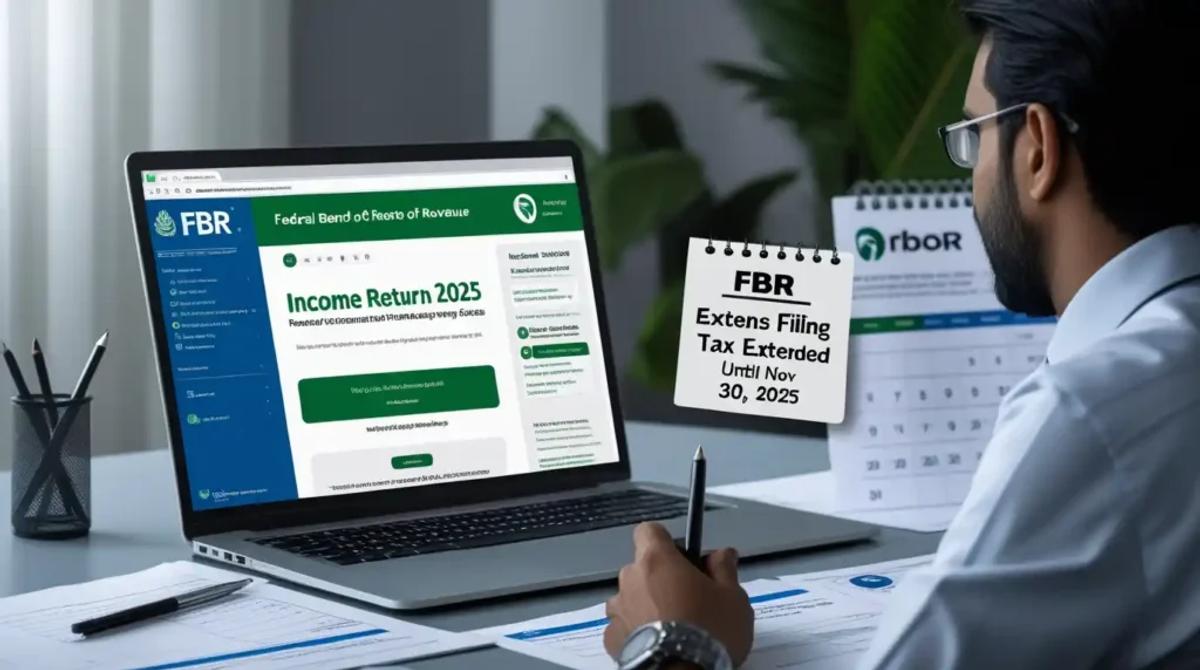
The Federal Board of Revenue has announced a significant relief for taxpayers across Pakistan by extending the deadline for manual filing of income tax returns until November 30, 2025. This extension comes as welcome news for those facing challenges with online filing through the IRIS portal. If you've been struggling with technical issues or prefer traditional filing methods, this extended deadline gives you breathing room to complete your tax obligations without penalties.
Understanding the FBR Deadline Extension 2025
The FBR extends deadline announcement marks an important development in Pakistan's tax filing landscape. While the original deadline of September 30, 2025 remains in effect for online filing through the IRIS portal, taxpayers who choose manual filing now have until November 30, 2025 to submit their returns.
This decision by the Federal Board of Revenue acknowledges the practical challenges many taxpayers face, particularly in areas with limited internet connectivity or those unfamiliar with digital filing systems. The tax return filing deadline extension specifically targets individuals and businesses that prefer visiting FBR facilitation centers or Regional Tax Offices personally.
Key Dates to Remember
September 30, 2025: Deadline for online filing through IRIS portal November 30, 2025: Extended deadline for manual/physical filing of returns Tax Year: July 2024 to June 2025
This dual-deadline approach allows the FBR to encourage digital transformation while ensuring no taxpayer is left behind due to technical barriers. The income tax return deadline Pakistan now offers flexibility based on your filing preference.
Why This Extension Matters for Pakistani Taxpayers
Understanding why the FBR latest updates 2025 include this extension helps you appreciate its significance for tax compliance Pakistan.
Addressing Technical Challenges: Many taxpayers across Pakistan, especially in smaller cities and rural areas, face persistent issues with the IRIS portal. Common problems include slow internet speeds, server downtime during peak hours, and difficulty navigating the digital interface. The FBR portal not working has been a frequent complaint on social media and helpline calls.
Supporting Traditional Filers: Older taxpayers and small business owners who are less comfortable with technology can now complete their returns through manual submission at FBR offices in Islamabad, Karachi, Lahore, and other cities without rushing or facing penalties.
Reducing Penalty Burden: By providing this extension, the FBR demonstrates a taxpayer-friendly approach that prioritizes compliance over penalization. This helps maintain the integrity of the tax system while supporting voluntary tax compliance.
Regional Accessibility: Not everyone has equal access to reliable internet or computer facilities. This extension particularly benefits taxpayers in areas like Quetta, Peshawar, Multan, and smaller towns where digital infrastructure may be limited.
The difference between online tax filing vs manual filing becomes a choice rather than a challenge, allowing taxpayers to select the method that works best for their circumstances.
Who Can Benefit from Manual Filing Extension?
The extended deadline income tax provisions apply to specific categories of taxpayers who may find manual filing more suitable:
Individual Salaried Persons: If you're a salaried employee who prefers submitting physical documents and wants personal assistance from FBR staff, you can visit your nearest Regional Tax Office (RTO) with required documents and file manually by November 30.
Small Business Owners: Businesses with limited digital infrastructure or those who maintain manual accounting records can prepare their returns on paper and submit them at FBR offices.
Senior Citizens: Older taxpayers who find the IRIS portal confusing or lack technical support can opt for manual filing with assistance from FBR facilitation desks.
Remote Area Residents: Taxpayers living in areas with poor internet connectivity or frequent power outages can travel to the nearest FBR office when convenient and file manually.
First-Time Filers: Those filing their first income tax return and needing face-to-face guidance can benefit from this extension to understand the process better.
However, it's important to note that while manual filing is extended, e-filing income tax Pakistan remains the faster and more convenient option for most taxpayers. The FBR continues to encourage digital filing as it reduces processing time and minimizes errors.
Step-by-Step Guide for Manual Filing at FBR Offices
If you're planning to take advantage of the income tax return filing deadline extension September 2025, here's how to file manually:
Step 1: Gather Required Documents
Before visiting an FBR office, collect all necessary documentation:
- Original CNIC and photocopy
- National Tax Number (NTN) certificate
- Salary certificates for the entire tax year (if salaried)
- Bank statements showing income deposits
- Previous year's tax return (if applicable)
- Proof of tax payments (challans, receipts)
- Business financial statements (for business owners)
- Wealth statement documents (if required)
Step 2: Download and Complete Tax Return Forms
Visit the FBR website and download the appropriate form. Most salaried individuals use Form 1, while business owners typically use Form 2 or 3. You can also collect blank forms from FBR offices.
Fill out the form carefully with accurate information. The income tax return form Pakistan requires details about your income sources, deductions, tax calculations, and asset declarations.
Step 3: Calculate Your Tax Liability
Use the current tax slabs Pakistan to calculate your taxable income. You can refer to the FBR tax calculator or consult with tax practitioners for accurate calculations. Remember to account for:
- Salary income after allowed deductions
- Business income and expenses
- Capital gains from property or investments
- Withholding tax already deducted
Step 4: Locate Your Nearest FBR Office
Find the appropriate office based on your jurisdiction. Major cities have multiple locations:
- FBR Islamabad office: Multiple RTOs serve different sectors
- FBR Karachi tax office: LTU Karachi and several RTOs
- FBR Lahore regional office: Multiple zones covering different areas
- FBR Rawalpindi office, Peshawar, Multan, Faisalabad: Regional offices in each city
Contact the FBR helpline number (051-111-772-772) to confirm office locations and working hours.
Step 5: Submit Your Return
Visit the office during working hours (typically 9 AM to 5 PM, Monday to Friday). Submit your completed form along with all supporting documents. The FBR staff will review your submission and provide an acknowledgment receipt.
Step 6: Make Tax Payment (if applicable)
If you owe taxes, generate a challan and make payment at designated bank branches. Keep the payment receipt as proof and attach a copy to your filed return.
Step 7: Collect Acknowledgment
Ensure you receive a stamped acknowledgment slip showing the date of submission and file reference number. This is your proof of timely filing.
Online Filing vs Manual Filing: Making the Right Choice
Understanding the FBR vs provincial revenue authorities processes and the pros and cons of each filing method helps you make an informed decision:
Advantages of Online Filing (IRIS Portal)
Speed and Convenience: File from home or office anytime, 24/7 access (when servers are functional)
Instant Acknowledgment: Immediate confirmation upon successful submission
Automatic Calculations: Built-in tax calculator reduces mathematical errors
Document Storage: Digital copies stored securely in your profile
Easy Amendments: Can file corrections online if needed
Environmental Friendly: No paper waste
Advantages of Manual Filing
Personal Assistance: FBR staff can guide you through the process
No Technical Requirements: No need for internet, computer, or digital literacy
Face-to-Face Verification: Immediate clarification of doubts
Physical Documentation: Some taxpayers prefer maintaining paper trails
Suitable for Complex Cases: Businesses with complicated tax situations might benefit from in-person submission
Choosing Your Method
For tech-savvy individuals with reliable internet, FBR online filing remains the best choice. However, if you face persistent IRIS portal login issues or prefer personal interaction, manual filing by November 30 is your solution.
Documents Required for Manual Income Tax Filing
Proper documentation ensures smooth processing of your return. Here's what you need for documents required for income tax return filing FBR:
For Salaried Individuals
- Complete salary certificates from employer(s)
- Tax deduction certificates (showing withholding tax)
- Form W-2 Pakistan equivalent (annual salary statement)
- Bank statements showing salary credits
- Investment proofs (if claiming deductions)
- Previous year's return acknowledgment
For Business Owners
- Audited financial statements (if applicable)
- Sales and purchase records
- Business bank statements
- Advance tax payment challans
- Sales tax registration certificate (if registered)
- Rent agreements for business premises
- Utility bills proving business location
Common for All Categories
- CNIC (original and copy)
- NTN certificate
- Proof of address (utility bill, rent agreement)
- Asset documentation for wealth statement
- Details of foreign income (if any)
- Proof of tax-exempt income (if claiming)
Organizing these documents beforehand saves time at the FBR office and ensures your return is accepted without issues.
Understanding Active Taxpayer List (ATL) and Its Benefits
Whether you file online or manually, maintaining your status on the Active Taxpayer List (ATL) is crucial for enjoying tax benefits in Pakistan.
What is ATL Status?
The Active Taxpayer List is a directory of compliant taxpayers maintained by the FBR. Being on this list designates you as a "filer" and provides numerous financial advantages.
Key Benefits of Filer Status
Reduced Withholding Tax: Filers pay significantly lower rates on banking transactions, property deals, and dividend income compared to non-filers.
Property Transactions: When buying property, filers pay half the withholding tax that non-filers pay. For a PKR 50 million property, this difference could be millions of rupees.
Vehicle Registration: New car buyers save substantially as filers pay lower registration taxes.
Banking Benefits: Lower tax deduction on banking transactions and easier loan approvals.
Business Credibility: Being a filer enhances your credibility with banks, suppliers, and business partners.
How to Check ATL Status
Use the FBR filer status check online by CNIC service on the FBR website. Simply enter your 13-digit CNIC to verify whether you're listed as an active taxpayer.
To maintain or gain filer status, you must file your return by the applicable deadline—September 30 for online filing or November 30 for manual filing under the current extension.
Common Errors to Avoid When Filing Manually
Manual filing carries certain risks of errors that can delay processing or lead to rejection. Here are tax filing errors and solutions to watch for:
Incomplete Forms: Leaving sections blank or providing partial information is a common mistake. Ensure every applicable field is filled accurately.
Mathematical Errors: Without the automatic calculator available in IRIS, manual calculations are prone to mistakes. Double-check all arithmetic or use the FBR tax calculator beforehand.
Missing Signatures: Unsigned forms are automatically rejected. Sign wherever required and ensure signatures match your CNIC.
Incorrect NTN: Writing the wrong NTN or mismatching it with your CNIC can cause processing delays.
Insufficient Documentation: Failing to attach required supporting documents means your return won't be processed until you provide them.
Wrong Office Submission: Filing at an office outside your jurisdiction can create complications. Verify your assigned RTO before visiting.
Late Submission: Even with the extension to November 30, submitting on the last day risks missing the deadline if unexpected issues arise. File at least a week early.
Penalties and Consequences You Should Know
Understanding the penalty for late filing of income tax return Pakistan helps you appreciate why meeting deadlines matters:
Financial Penalties
The Income Tax Ordinance 2001 prescribes specific penalties for late filing:
- Individuals: PKR 5,000 minimum penalty
- Association of Persons: PKR 10,000
- Companies: PKR 50,000
These penalties increase with the duration of delay.
Loss of Filer Status
Missing the deadline removes you from the Active Taxpayer List, resulting in:
- Higher withholding tax rates on all transactions
- Restrictions on property purchases
- Higher vehicle registration costs
- Reduced credibility in business dealings
Tax Scrutiny and Notices
Late filers are more likely to receive scrutiny notices from the FBR, potentially leading to tax audit procedures and detailed investigations into your income sources.
Interest on Unpaid Tax
If you owe tax and file late, interest accrues from the original due date until payment, adding to your financial burden.
Why Professional Taxation Training Matters
Whether you're filing for yourself or considering a career in taxation, professional education makes a significant difference. Understanding the complexities of the Income Tax Ordinance 2001 and staying updated with amendments requires structured learning.
Career Opportunities in Taxation
Pakistan's tax landscape is expanding, creating demand for qualified professionals:
Tax Consultants: Help individuals and businesses with compliance, planning, and representation before tax authorities.
Corporate Tax Managers: Large companies need in-house experts to manage tax obligations, audits, and strategic planning.
FBR Positions: The Federal Board of Revenue regularly recruits qualified individuals for various positions, from data entry to policy-making roles.
Freelance Tax Practitioners: Offer services to multiple clients during tax season, earning substantial income.
Benefits of Structured Learning
A comprehensive taxation course in Pakistan offers:
- Deep understanding of tax laws and their practical application
- Skills to handle complex tax situations
- Certification that enhances employability
- Networking opportunities with professionals and practitioners
- Updated knowledge of FBR systems including IRIS portal operations
Why Choose the Institute of Corporate and Taxation (ICT)
For those serious about mastering taxation, ICT offers specialized programs designed for both beginners and experienced professionals. Their taxation course in Islamabad and taxation course in Karachi provide:
- Experienced faculty with practical FBR experience
- Hands-on training with real-world case studies
- Coverage of income tax, sales tax, and federal excise
- IRIS portal practical training
- Placement assistance for graduates
- Flexible class schedules for working professionals
As the best taxation institute in Pakistan, ICT has trained thousands of successful tax professionals who now work with leading firms and organizations across the country.
Location-Specific Information for Manual Filing
Knowing where to file manually in your city helps you plan your visit efficiently:
Major City Offices
Islamabad: The FBR head office Islamabad and multiple RTOs serve different sectors. Zone-I covers urban areas while other zones handle specific regions.
Karachi: Being Pakistan's commercial hub, Karachi has the Large Taxpayer Unit (LTU) for major corporations and several RTOs for individuals and SMEs. The FBR Karachi office address varies by zone.
Lahore: The FBR Lahore regional office manages multiple zones covering different parts of the city and surrounding districts.
Other Cities: Rawalpindi, Peshawar, Quetta, Multan, Faisalabad, and Hyderabad all have dedicated RTO offices with facilitation desks for manual filing assistance.
Getting Help
If you're unsure about your jurisdiction or need guidance, contact the FBR helpline number Karachi (021-111-772-772) or FBR helpline number Islamabad (051-111-772-772) for assistance.
Frequently Asked Questions
What is the deadline for manual filing of income tax returns in Pakistan? The FBR has extended the manual filing deadline until November 30, 2025. This applies to taxpayers submitting physical returns at FBR offices. Online filing through IRIS portal remains September 30, 2025.
Can I file my tax return manually if I prefer not to use the IRIS portal? Yes, you can file manually by visiting your designated Regional Tax Office (RTO) with completed forms and supporting documents. This option is available until November 30, 2025 under the current extension.
What documents do I need for manual tax filing? You need your CNIC, NTN certificate, salary certificates or business financial statements, bank statements, previous year's return, tax payment challans, and wealth statement documents if applicable. Carry both originals and photocopies.
Will I lose my filer status if I file manually instead of online? No, filing manually does not affect your filer status as long as you submit before the November 30 deadline. Both online and manual filing are equally valid for maintaining Active Taxpayer List status.
Where can I get help with manual filing in my city? Visit your nearest FBR Regional Tax Office. Major cities like Karachi, Lahore, and Islamabad have multiple RTOs with facilitation desks. You can also call the FBR helpline at 051-111-772-772 for guidance.
Is there any difference in tax calculation for online vs manual filing? No, the tax calculation remains the same regardless of filing method. You use the same tax slabs Pakistan and rules. However, the IRIS portal automatically calculates tax, while manual filing requires you to calculate or seek professional help.
Conclusion
The FBR extends deadline announcement for manual filing until November 30, 2025 demonstrates the government's commitment to inclusive tax compliance. Whether you choose the convenience of online filing or prefer the personal touch of manual submission, ensuring timely filing keeps you compliant and maintains your valuable filer status.
Understanding the nuances of Pakistan's tax system, from deadlines and documentation to filing procedures and benefits, empowers you to fulfill your civic duty efficiently. The dual-deadline approach accommodates diverse taxpayer needs while encouraging gradual digital adoption.
For those looking to deepen their taxation knowledge—whether for personal benefit or professional growth—structured education makes all the difference. The complexities of the Income Tax Ordinance 2001, frequent amendments through Finance Acts, and evolving FBR systems require more than casual understanding.
Ready to become a taxation expert and open doors to lucrative career opportunities? Book a seat at the Advanced Taxation Course offered by ICT—the Institute of Corporate and Taxation. With comprehensive curriculum, experienced faculty, and practical training on IRIS portal and tax compliance, ICT prepares you for success in Pakistan's growing taxation sector.
Don't wait until the deadline approaches. Whether you're filing your return or building your taxation expertise, take action today. Your financial compliance and career growth depend on the decisions you make now.