What Software Do Tax Professionals Use? (And Will You Learn Them?)
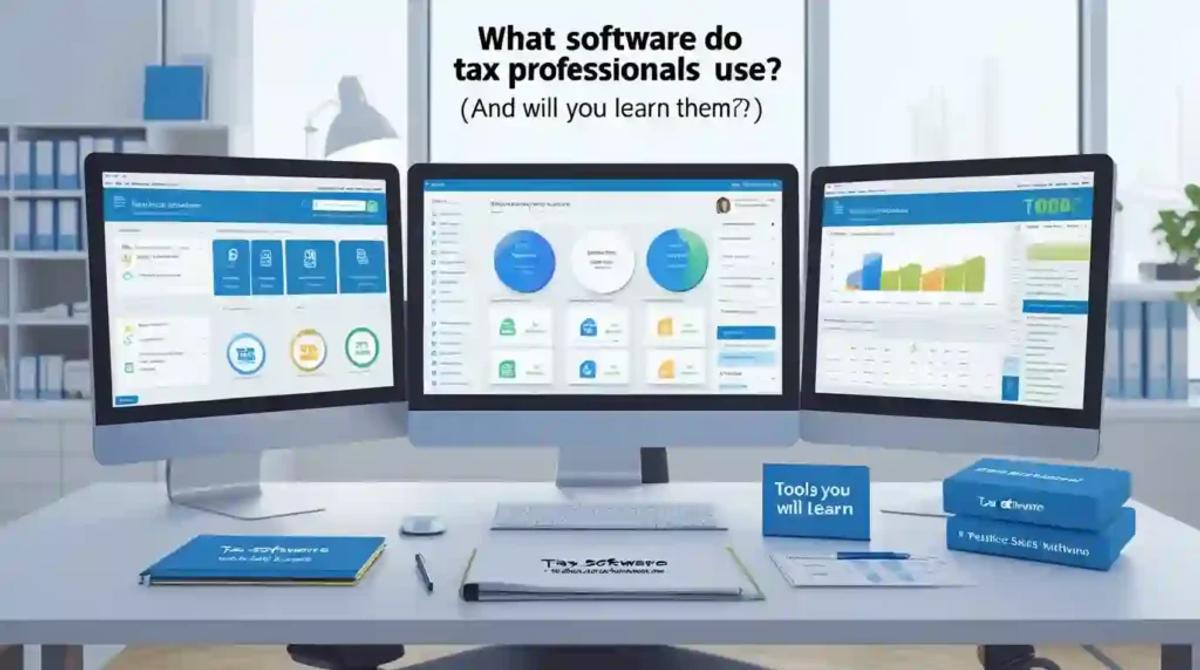
If you're considering a career in tax preparation or wondering whether your accounting education will prepare you for the real world, you've probably asked yourself: what software do tax professionals actually use? The answer might surprise you. While you're familiar with consumer software like TurboTax, professional tax preparation software is an entirely different beast—and yes, you absolutely will need to learn it.
Whether you're exploring a taxation course in Pakistan or planning to work internationally, understanding professional tax software is crucial. This comprehensive guide breaks down everything you need to know about tax professional software, from the most popular platforms to how you'll master them in your career.
What Software Do Tax Professionals Use?
Professional tax preparers rely on specialized commercial tax software that's far more robust than consumer versions. These platforms handle complex business returns, multi-state filings, and high-volume tax season workflows that basic software simply cannot manage.
The most popular tax software for professionals includes Drake Tax, Lacerte Tax, ProSeries, UltraTax CS, and CCH Axcess. These aren't programs you can buy at an electronics store—they're enterprise-level solutions designed for CPAs, enrolled agents, and professional tax preparers who file hundreds or thousands of returns annually.
Unlike TurboTax or H&R Block's consumer software, professional tax preparation software offers advanced features like multi-user access, client portals, e-signature capabilities, and seamless integration with accounting platforms like QuickBooks. They're built to handle everything from simple 1040 individual returns to complex partnership, S-corporation, and trust tax filings.
The Difference Between Consumer and Professional Tax Software
Here's what sets professional platforms apart: consumer software guides you through questions to fill out forms, while accounting software for tax preparers assumes you already understand tax law. Professional software gives you direct access to every line of every tax form, allowing experienced preparers to work quickly and efficiently.
Professional platforms also include tax research tools, audit trail functionality, and batch processing capabilities. When tax season hits and you're preparing dozens of returns daily, these features become essential. The software integrates with practice management systems, time tracking, and billing—creating a complete ecosystem for running a tax practice.
Cost is another major difference. While consumer software might cost $50-$150 per year, CPA tax software subscriptions can range from $1,000 to $10,000+ annually, depending on the platform and number of users. This investment makes sense for professionals who charge $200-$500+ per tax return.
Most Popular Tax Software Platforms
Drake Tax
Drake Tax has earned a reputation as one of the best value options in professional tax programs. It offers comprehensive features at a competitive price point, making it particularly popular among small to mid-sized firms. The software handles individual, business, and trust returns with excellent customer support and regular updates that reflect current tax law changes.
Many practitioners appreciate Drake's straightforward interface and reliable performance during the hectic tax season. The software includes built-in diagnostics that catch common errors before filing, saving professionals time and reducing amendment risk.
Lacerte Tax Software
Considered the gold standard by many tax professionals, Lacerte (owned by Intuit) is known for its powerful capabilities and extensive form coverage. This tax professional software excels at handling complex returns, including multi-state filings, consolidated corporations, and intricate partnership allocations.
While Lacerte comes with a premium price tag, its depth of features and calculation accuracy make it worthwhile for practices handling sophisticated clients. The software's integration with Intuit ProConnect and QuickBooks creates a seamless workflow from bookkeeping through tax filing.
ProSeries
Also from Intuit, ProSeries offers a middle-ground option between consumer software and high-end platforms like Lacerte. It's an excellent choice for growing practices that need professional features without the steepest learning curve. ProSeries handles most common business scenarios effectively while remaining accessible to newer tax preparers.
UltraTax CS and CCH Axcess
Thomson Reuters' UltraTax CS and CCH Axcess represent enterprise-level solutions favored by larger accounting firms. These platforms offer sophisticated tax workflow automation, detailed reporting capabilities, and seamless integration with audit and accounting software from the same provider.
Big 4 accounting firms and large regional practices often standardize on CCH Axcess because of its scalability and comprehensive feature set. The cloud-based tax software architecture allows teams to collaborate efficiently, even when working remotely.
Other Notable Platforms
TaxAct Professional, ATX Tax Software, and TaxSlayer Pro serve specific market niches effectively. Each platform has its strengths—some excel at small business returns, others at individual filings, and some at specific industries like real estate or construction.
Understanding Tax Software in Pakistan
For those pursuing a taxation course in Pakistan, it's important to understand both international software and local requirements. Pakistan's tax system, governed by the Federal Board of Revenue (FBR), uses the IRIS system for e-filing. Tax professionals in Pakistan need familiarity with FBR Pakistan systems including IRIS FBR, e FBR, and the FBR login portal.
While international software like Drake or Lacerte focuses on US tax returns, Pakistani tax professionals often work with specialized software that handles local tax forms, sales tax returns, and income tax computations according to Pakistani tax law. The best taxation course in Islamabad, taxation course in Karachi, or taxation course in Lahore will include training on both local FBR systems and international platforms.
Understanding FBR online verification systems and staying current with FBR notifications is essential for Pakistani tax professionals. Many practices also serve international clients or expats, requiring knowledge of cross-border tax software and international tax compliance solutions.
Will You Learn Tax Software in Your Education?
The short answer: it depends on your program, but probably not comprehensively. Most accounting degree programs introduce students to tax concepts and may provide limited exposure to professional tax software, but they rarely offer in-depth training on specific platforms.
Here's the reality—universities typically focus on teaching tax theory and regulations rather than software proficiency. You might get a semester where your professor uses ProSeries for demonstrations, but you won't graduate as a Drake Tax expert. That's actually okay, because the real learning happens on the job.
Tax software training is usually provided by employers when you start working. Firms have preferred platforms, and they'll train you on their specific software during your first tax season. This employer-provided software training includes hands-on experience with real returns under supervision, which is far more valuable than classroom software demonstrations.
For students in a taxation course in Pakistan at the Institute of Corporate and Taxation, you'll gain practical exposure to both local FBR systems and international software platforms, giving you an advantage when entering the job market.
The Learning Curve: How Long Does It Take?
New tax professionals often worry about the professional tax software learning curve, but here's the good news: if you understand tax law, the software becomes intuitive surprisingly quickly. Most people become comfortable with basic returns within their first tax season (January through April).
For simple individual returns, you might feel confident after preparing 20-30 returns under supervision. Business returns, partnerships, and complex scenarios take longer—perhaps a full year or two before you're truly proficient. The key is that tax knowledge transfers between platforms, so once you master one software, learning another becomes much easier.
Drake Tax training courses and Lacerte software tutorials are widely available online, often free from the software companies themselves. Many platforms offer webinars, user communities, and extensive help documentation. YouTube channels run by experienced tax preparers provide practical tips that supplement official training.
Hands-on tax software training through practice returns is invaluable. Most software companies offer demo versions or student licenses specifically for learning purposes. Taking advantage of these resources before your first professional tax season gives you a significant head start.
Key Features of Professional Tax Software
Understanding what tax preparation tools offer helps you appreciate why professionals rely on them:
E-Filing Capabilities: All professional software includes IRS-approved e-filing for federal and state returns. The software validates returns before submission, reducing rejection rates and speeding up refund processing for clients.
Client Portals: Modern client collaboration tools allow secure document sharing, e-signatures, and communication. Clients upload their tax documents directly to your system, reducing email security risks and keeping everything organized.
Integration: Professional platforms connect with bookkeeping software through QuickBooks integration, practice management systems, and document management solutions. This tax workflow automation eliminates duplicate data entry and reduces errors.
Multi-State Filing: For practices serving clients across multiple states, multi-state tax software handles varying state tax laws, credits, and apportionment rules automatically—something that would be nightmarishly complex to manage manually.
Tax Research Tools: Many platforms include or integrate with tax research databases like RIA Checkpoint or Bloomberg Tax, putting authoritative guidance at your fingertips while preparing returns.
Bank Products: Tax software with bank product integration allows you to offer refund advances and fee payment options, making your services more competitive and improving cash flow.
Career Opportunities and Software Proficiency
Proficiency with professional tax software significantly impacts your career prospects. Job postings for tax preparers frequently specify experience with Drake, Lacerte, or other major platforms. The more software you've used, the more marketable you become.
Small firms and sole practitioners often prefer Drake for its value, while corporate positions might require CCH or UltraTax experience. Understanding this helps you target your learning and job search strategically. Seasonal tax preparers working for franchises will use whatever platform that company standardizes on—often TaxSlayer Pro or similar mid-range software.
For those completing a taxation course in Pakistan and seeking international opportunities, familiarity with US tax software opens doors to remote work with American firms. Many US practices hire international preparers during tax season, and software proficiency is a key requirement for these high-paying remote positions.
The tax preparation career outlook remains strong, with consistent demand for qualified professionals. As software becomes more sophisticated, the focus shifts from data entry to tax strategy and planning—making your expertise more valuable, not less.
Choosing Software for Your Practice
If you're planning to start your own practice, selecting the right tax practice management software is crucial. Consider these factors:
Client Mix: What types of returns will you primarily prepare? Individual returns require less sophisticated software than business filings. Tax software for small firms handling mainly 1040s has different needs than practices serving corporations and partnerships.
Budget: Tax software pricing comparison reveals significant variation. Factor in not just subscription costs but training time, support quality, and integration needs. The cheapest option isn't always the best value.
Scalability: Choose scalable tax software solutions that grow with your practice. Starting with software that can't handle business returns means switching later—a costly and disruptive process.
Support: Tax season runs on tight deadlines. Software with excellent customer support and active user communities can save your practice when technical issues arise at midnight on April 14th.
Cloud vs. Desktop: Desktop vs cloud tax software each have merits. Cloud-based platforms offer anywhere access and automatic updates, while desktop software provides more control and often better performance with large returns.
Free Resources and Training
You don't need to spend thousands before landing your first tax job. Many software companies offer free training for professional tax software including:
The Institute of Corporate and Taxation provides comprehensive training that includes exposure to multiple software platforms, giving students practical skills that complement theoretical knowledge gained in a taxation course in Pakistan.
Professional development shouldn't stop after your initial training. Tax software continuing education keeps you current on new features, regulatory changes, and best practices. Most software companies offer annual conferences where users learn advanced techniques and network with peers.
The Future of Tax Software
Tax technology continues evolving rapidly. Artificial intelligence and machine learning are being incorporated into tax calculation engines, automating complex computations and catching potential issues. Client portals are becoming more sophisticated, with mobile tax software applications allowing clients to snap photos of documents instead of scanning them.
API integration tax software increasingly connects with banking systems, investment platforms, and payroll providers, pulling data directly rather than requiring manual entry. This automation reduces errors and speeds up preparation time significantly.
Cryptocurrency tax software for professionals has emerged as a specialized niche, helping practitioners navigate the complexities of digital asset taxation. As regulations evolve, software that handles crypto transactions effectively becomes increasingly valuable.
Despite technological advances, the need for knowledgeable tax professionals remains strong. Software handles calculations, but professionals provide strategic planning, represent clients before tax authorities, and navigate the gray areas of tax law where human judgment is irreplaceable.
Why Choose ICT for Your Tax Software Training?
The Institute of Corporate and Taxation understands that theoretical knowledge alone doesn't prepare you for professional success. That's why our advanced taxation course includes extensive hands-on training with the software platforms you'll actually use in your career.
Whether you're looking for a taxation course in Islamabad, Karachi, or Lahore, ICT provides practical skills training that bridges the gap between academic knowledge and professional competence. Our curriculum covers both Pakistani FBR systems and international tax software, preparing you for opportunities both locally and globally.
Students gain experience with multiple platforms, learning transferable skills that make you valuable to any employer. Our instructors are practicing tax professionals who understand current industry demands and teach the techniques actually used in successful practices.
Frequently Asked Questions
What software do tax professionals use most commonly?
The most widely used professional tax software includes Drake Tax, Lacerte, ProSeries, UltraTax CS, and CCH Axcess. Drake is particularly popular among small to mid-sized firms for its excellent value, while Lacerte and CCH dominate larger practices handling complex returns.
Do I need certification to use professional tax software?
No certification is required to use tax software itself, but you typically need credentials (CPA, EA, or AFSP) to prepare taxes professionally. Software companies provide their own training and certification programs, but these aren't legal requirements.
How much does professional tax software cost?
Professional tax software subscriptions range from $1,000 to $10,000+ annually depending on the platform, number of users, and features included. Per-return pricing is also available with some providers, which can be more economical for seasonal or low-volume preparers.
Will I learn tax software in accounting school?
Most accounting programs provide limited software exposure, focusing instead on tax theory and regulations. Comprehensive software training typically happens during employment, with firms training new hires on their preferred platforms during the first tax season.
Can professional tax software handle complex international returns?
Yes, advanced platforms offer professional tax software for international returns, including expat filings, foreign income, and cross-border taxation. Specialized software exists for specific international scenarios, though most major platforms handle common international situations effectively.
Is cloud-based tax software secure for sensitive client data?
Modern cloud-based tax software uses bank-level encryption, multi-factor authentication, and rigorous security protocols. Major providers invest heavily in security and comply with IRS data protection requirements, making cloud platforms as secure as—or more secure than—local desktop installations.
Conclusion: Your Path to Tax Software Mastery
Understanding what software tax professionals use and how you'll learn it removes much of the mystery from starting a tax preparation career. While your education provides the foundation of tax knowledge, software proficiency develops through hands-on experience in professional settings.
The good news? Tax software is designed to be learnable. If you understand tax concepts, the software becomes a powerful tool rather than an obstacle. Your first tax season will challenge you, but by the end, you'll wonder how anyone ever prepared returns manually.
Whether you're in Pakistan or planning international opportunities, combining strong tax education with software training creates career options across the industry. From small practice work to corporate positions to seasonal remote opportunities, software-savvy tax professionals remain in high demand.
Ready to start your journey? Book a seat at the Advanced Taxation Course offered by ICT—the best taxation course in Pakistan that prepares you not just with theory, but with the practical software skills employers actually want. Don't just learn about taxation; learn to practice it professionally with the tools that matter.
Your future in tax preparation starts with the right education. Make it count.