
Skills Employers Will Demand from Tax Professionals in 2026
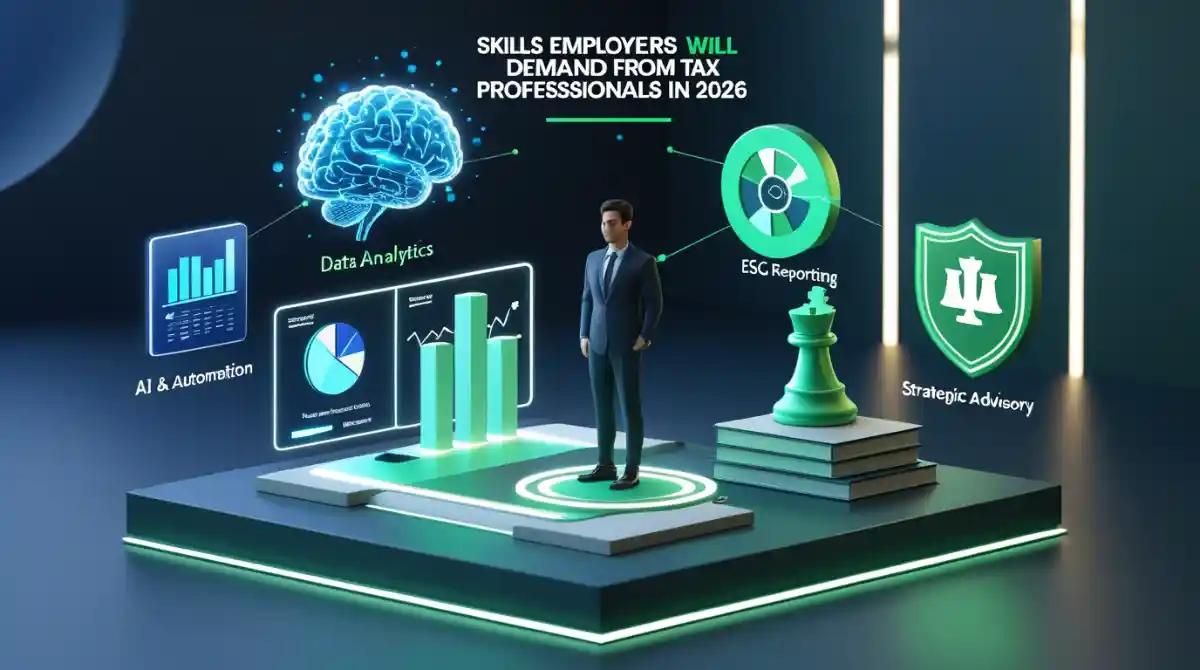
In 2026, employers are demanding tax professionals who go beyond number-crunching. The modern tax professional must master AI tools, data analytics, ERP systems, FBR/IRIS compliance, and strategic advisory skills. Whether you are a fresh graduate or a seasoned accountant, understanding these in-demand tax skills is the key to building a future-proof career in taxation.
The tax profession is undergoing its biggest transformation in decades. Automation is handling routine filing. AI is reading tax laws. And employers — from Big Four firms like KPMG, Deloitte, PwC, and EY to local corporates in Islamabad, Karachi, and Lahore — are actively hunting for professionals who combine technical expertise with strategic thinking.
So, what exactly are these skills? Let's break them down.
Why Tax Professional Skills Are Changing in 2026
The Bureau of Labor Statistics (BLS) projects a 4.6% growth in accounting and tax-related occupations, with average salaries rising by 3.7% annually. In Pakistan, the Federal Board of Revenue (FBR) has pushed hard on digital transformation — launching IRIS 2.0, mandatory e-invoicing, and the SWAPS withholding system — forcing every tax professional to upgrade or get left behind.
According to the Robert Half Salary Guide 2026, companies are paying a significant premium for tax professionals who understand technology. The days of simply knowing the Income Tax Ordinance 2001 or the Sales Tax Act 1990 are over. Today, employers want professionals who can apply that knowledge inside digital ecosystems.
This is why thousands of students and professionals across Pakistan are now enrolling in advanced taxation courses — to stay relevant, competitive, and employable in a rapidly changing tax landscape.
Top Skills Employers Will Demand from Tax Professionals in 2026
1. FBR IRIS Portal Mastery and Digital Filing Expertise
If you want to work as a tax professional in Pakistan in 2026, IRIS portal mastery is non-negotiable. The FBR has digitized nearly every major function — from NTN registration and STRN verification to income tax return filing and wealth reconciliation statements.
Employers expect candidates to confidently navigate the IRIS system, handle e-filing without errors, process withholding tax statements, and manage the Active Taxpayer List (ATL) status for clients.
This also includes working within SWAPS (Synchronized Withholding Administration and Payment System) and understanding FBR's digital invoicing deadlines and e-invoicing requirements. If you cannot operate these systems, you are simply not hireable in 2026.
Want to build these skills from scratch? ICT's Advanced Taxation Course covers every module of IRIS with hands-on, practical training.
2. AI and Automation Skills for Tax Professionals
Artificial intelligence is reshaping the tax profession globally. According to a 2026 industry survey, over 65% of mid-to-large accounting firms are already using AI-powered tools for tax research, compliance checking, and anomaly detection.
What does this mean for you? Employers now expect tax professionals to:
- Use AI tools to automate repetitive compliance tasks
- Understand AI governance in tax decision-making
- Apply AI prompt engineering to extract legal insights from tax databases
- Review and validate AI-generated tax outputs
Critically, AI will not replace tax professionals — but tax professionals who use AI will replace those who don't. The role is shifting from manual preparer to intelligent advisor.
Explore how AI is transforming the profession in depth at ICT's blog on AI in Taxation.
3. Data Analytics and ERP Skills
Tax is no longer just about laws — it is about data. Modern employers want professionals who can pull financial data from ERP systems like SAP, Oracle, and QuickBooks, analyze tax exposure, identify anomalies, and present findings in a clear, decision-ready format.
Data analytics skills for tax accountants now include:
- Reading and interpreting large datasets for tax compliance
- Reconciling accounts within ERP platforms
- Using Excel or Power BI to model tax scenarios
- Identifying transfer pricing risks and cross-border tax exposure
Companies in Pakistan's corporate sector — especially MNCs operating under the SECP and multinationals managing double taxation treaties — specifically list ERP and data analytics as must-have skills in 2026 job postings.
If you want to pair tax expertise with data skills, check out ICT's Certified Data Analyst Course.
4. Strategic Tax Advisory Skills
The biggest shift happening in 2026 is the move from tax preparer to tax advisor. Employers are no longer satisfied with professionals who just file returns. They want strategic thinkers who can:
- Provide year-round proactive tax planning
- Advise on optimal corporate structures for tax efficiency
- Manage tax risk and scenario planning
- Communicate complex tax strategies in simple business language
This advisory shift is driven by the fact that routine compliance is increasingly automated. What remains — and what clients genuinely value — is strategic guidance, interpretation of new regulations, and risk management.
A certified tax advisor with advisory skills can earn significantly more than a basic return filer. Learn what this career looks like at ICT's blog on career opportunities after becoming a Certified Tax Advisor.
5. International Taxation Knowledge
Pakistan's economy is becoming increasingly integrated with global markets. Employers — particularly in Islamabad, Karachi, and Lahore — are hiring professionals who understand:
- UAE VAT and corporate tax compliance
- UK HMRC taxation rules
- US IRS regulations including TCJA implications
- Canadian CRA tax requirements
- Saudi Arabia's Zakat and VAT framework
- Cross-border transfer pricing and double taxation treaties
Pakistani tax professionals with international certification are in high demand in the UAE, Saudi Arabia, the UK, and Canada. This is one of the fastest-growing career paths for Pakistani professionals in 2026.
ICT offers dedicated international courses including UK Taxation, USA Taxation, Canadian Taxation, UAE Taxation, and Saudi Taxation.
6. Tax Compliance Automation and Digital Invoicing
FBR's mandatory digital invoicing system, launched in phases, is now a compliance reality in 2026. Tax professionals must understand:
- E-invoicing standards and FBR's POS invoice verification system
- PSID generation and CPR payment processes
- SRO notifications and their practical compliance impact
- Digital tax audit preparation and defense
Employers value professionals who can implement compliance frameworks — not just understand them theoretically. Get a full breakdown at ICT's guide to FBR's Digital Invoicing System.

Skills Employers Will Demand from Tax Professionals in 2026
7. Corporate Tax Planning and Litigation Skills
Senior-level tax roles in 2026 demand the ability to handle tax litigation — responding to FBR notices, filing appeals before the Income Tax Appellate Tribunal, and managing tax audits.
Advanced skills in this area include:
- Drafting responses to Section 111, 147, and 120 notices
- Corporate tax planning aligned with SECP requirements
- Managing professional tax obligations across Punjab, Sindh, KPK, and Balochistan
- Understanding provincial revenue authority frameworks
These are high-value skills that command premium salaries. For a detailed course covering these topics, explore ICT's Advanced Taxation and Litigation Course.
8. Soft Skills That Employers Increasingly Value
Technical skills alone are no longer enough. In 2026, employers across accounting firms, MNCs, and tax consultancies are actively looking for:
- Clear communication: Explaining complex tax scenarios to non-finance clients
- Adaptability: Quickly absorbing new FBR regulations and system changes
- Client management: Building long-term advisory relationships
- Critical thinking: Identifying tax saving opportunities and compliance risks
- Problem-solving: Handling tax notices and disputes under pressure
According to AICPA's workforce research, soft skills now rank among the top three differentiators in hiring decisions for tax roles.
Professional Tax in Pakistan — What Employers Expect You to Know
Professional tax in Pakistan is levied at the provincial level — professional tax Punjab, professional tax Sindh, and professional tax KPK each have separate frameworks, rates, and registration requirements.
Employers expect tax professionals to understand:
- How to obtain a professional tax certificate in Punjab, Sindh, and KPK
- Professional tax registration online procedures
- Professional tax challan download and payment processes
- Professional tax deduction from salary calculations
- Professional tax exemption rules for doctors and other categories
This is especially important for professionals working in corporate HR, payroll, or accounting departments. Read more about the complete excise and taxation framework at ICT's Excise and Taxation Guide for Pakistan.
Pakistan-Specific Tax Skills in High Demand
For tax professionals working in Pakistan, here are the specific technical competencies employers are demanding in 2026:
- Filing income tax returns on FBR IRIS for salaried individuals, businesses, and companies
- Sales tax registration (STRN) and monthly return filing via e-filing
- Withholding tax certificates and Section 153 compliance
- NTN registration and company incorporation with SECP
- Managing filer vs. non-filer status and Active Taxpayer List (ATL) updates
- Handling FBR audit notices and preparing documentation
For professionals in Islamabad, Karachi, Lahore, Rawalpindi, and Faisalabad, local demand for these skills has never been higher. See the full Tax Professional Salary Guide for Pakistan to understand earning potential.
Also, for deeper reading on Pakistan's income tax landscape, this guide on Pakistan Income Tax 2026 offers excellent context on current tax slabs and obligations.
Certifications That Give You a Competitive Edge in 2026
Employers consistently prioritize candidates with formal certifications. The most valuable certifications for tax professionals in 2026 include:
- Certified Tax Advisor (CTA) — highly valued in Pakistan and internationally
- CPA (Certified Public Accountant) — globally recognized
- Enrolled Agent (EA) — U.S. IRS-recognized certification
- ACCA with tax specialization — strong demand in UK and Middle East
- FBR Tax Practitioner License — required for practicing before FBR in Pakistan
- Advanced Taxation Diploma from ICT — practical, employer-preferred certification
For a full comparison, read ICT's guide on Certified Tax Advisor vs. Accountant in 2026.
Job Scope and Salary for Tax Professionals in 2026
The job market for qualified tax professionals in Pakistan is strong and growing. Typical roles include:
- Tax Consultant — PKR 80,000–250,000/month depending on experience
- Corporate Tax Manager — PKR 200,000–500,000/month in MNCs
- FBR Tax Practitioner — independent practice, unlimited earning potential
- International Tax Specialist — UAE/Saudi/UK-based roles earning AED 8,000–20,000/month
- Freelance Tax Consultant — remote work for US/UK/Canadian clients
The talent shortage in taxation is real. Firms are struggling to find qualified candidates who combine technical and digital skills. This gap is your opportunity.
For a complete picture of what you can earn, visit ICT's Tax Professional Salary Pakistan blog and explore FBR Tax Slabs 2025-26 for context on the current tax environment.
Why ICT Is the Top Choice for Taxation Training in Pakistan
The Institute of Corporate and Taxation (ICT) in Islamabad is Pakistan's leading institute for professional taxation courses. Here's why thousands of students and professionals trust ICT:
- Practical, hands-on training on FBR IRIS, e-filing, and real case studies
- Expert faculty with decades of real-world tax and corporate law experience
- Industry-recognized certification accepted by employers across Pakistan and internationally
- Courses covering domestic and international taxation — Pakistan, UAE, UK, USA, Canada, Saudi Arabia
- Flexible schedules — weekend, evening, and online options available
- Job placement support connecting graduates with top employers
ICT has trained thousands of tax professionals who are now working in top firms, MNCs, FBR offices, and as independent tax consultants. Read why students choose ICT at Why ICT is the No. 1 Institute for Corporate and Taxation in Islamabad.
You can also explore all available courses at ICT's Courses Page.
Frequently Asked Questions (FAQs)
What skills will tax professionals need in 2026? In 2026, tax professionals need IRIS/FBR digital filing skills, AI tool proficiency, data analytics, ERP system knowledge, international tax understanding, and strategic advisory capabilities. Soft skills like communication and adaptability are equally important.
Will AI replace tax professionals in 2026? No. AI automates routine tasks like data entry and basic return preparation, but strategic tax advisory, litigation support, client consultation, and complex compliance require human expertise. Professionals who use AI will outperform those who don't.
What is the best taxation course in Pakistan for 2026? ICT's Advanced Taxation and Litigation Course and Certified Tax Advisor program are among the most comprehensive and employer-recognized qualifications available in Pakistan. They cover FBR IRIS, income tax, sales tax, corporate tax, and litigation.
What is professional tax in Pakistan? Professional tax is a provincial tax levied on salaried individuals and professionals. Each province — Punjab, Sindh, KPK — has its own rates, registration requirements, and challan processes. Tax professionals must be familiar with the professional tax certificate process for all provinces.
How can I become a certified tax professional in Pakistan? Complete a recognized taxation certification such as the Certified Tax Advisor (CTA) program at ICT, register with FBR as a tax practitioner, and gain practical experience in IRIS filing, withholding tax, and compliance. You can enroll in ICT's Advance Taxation Course here.
Is tax accounting a good career in 2026? Absolutely. With Pakistan's expanding tax base, FBR digitalization, and growing demand for international tax skills, tax accounting offers excellent job security, competitive salaries, and strong freelancing opportunities globally.
Conclusion — Your Next Step Starts Here
The tax profession in 2026 is not what it was five years ago. Employers want professionals who are digitally fluent, analytically sharp, and strategically valuable. The skills outlined in this article — from IRIS mastery and AI tools to international taxation and advisory expertise — are the foundation of a competitive, high-earning tax career.
Whether you are based in Islamabad, Karachi, Lahore, or anywhere across Pakistan, the opportunity is real and the demand is growing. The only question is whether you are ready to step up.
Book your seat in ICT's Advanced Taxation Course today and build the skills that employers are actively hiring for in 2026. Visit ict courses to explore all programs and register now.
For additional resources on Pakistan's tax system, explore Pakistan Income Tax Calculator, FBR Active Taxpayer List 2026, and the Withholding Tax Guide Pakistan 2025-26.