
Career Roadmap After UK Taxation Course — Everything Students Need to Know
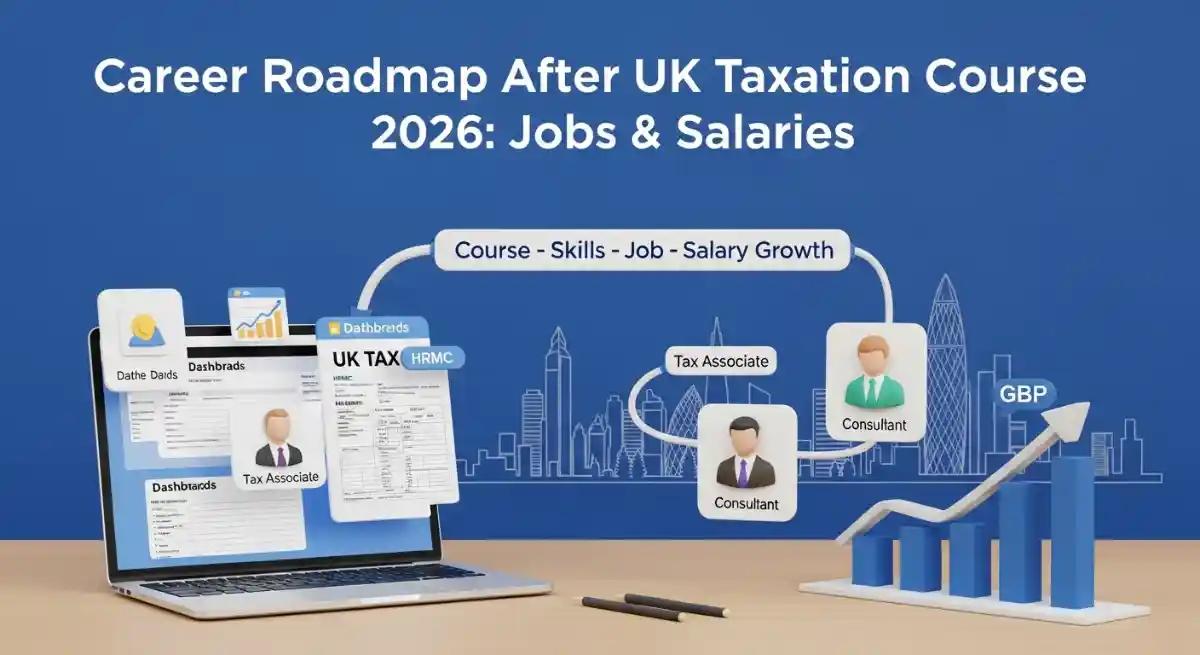
If you have just completed your UK taxation course — or you are thinking about enrolling — you are probably asking one important question: What happens next?
The answer is: a lot. The UK taxation certification is not just a piece of paper. It is a gateway to real, high-paying career opportunities — both inside Pakistan and internationally. Whether you are based in Islamabad, Lahore, or Karachi, a British taxation qualification puts you in a league of professionals that employers, firms, and clients actively seek out.
This guide walks you through a complete, step-by-step career roadmap after completing a UK taxation course — covering job roles, salary expectations, professional certifications, freelancing paths, and why ICT (Institute of Corporate and Taxation) is the smartest place to start your journey.
What Is a UK Taxation Course — And Why Does It Matter?
A UK taxation course is a specialized training program that teaches you the British tax system in full — from income tax and corporation tax to VAT returns, PAYE qualifications, Self Assessment procedures, National Insurance contributions, capital gains tax, and inheritance tax training.
Unlike a general accounting diploma, this course focuses specifically on:
- UK fiscal policy and tax legislation
- HMRC compliance requirements
- Making Tax Digital (MTD) compliance
- Direct and indirect tax systems in the UK
- Double taxation treaties and international tax frameworks
- Tax return preparation and filing skills
The curriculum also aligns with globally recognized bodies like the Association of Taxation Technicians (ATT) and the Chartered Institute of Taxation (CIOT) — credentials that HMRC and top UK accounting firms recognize directly.
For Pakistani professionals, the value is even greater. A UK tax certification program signals international competence. It tells employers you can operate across borders — and that is exactly what modern businesses need.
Why Pakistani Students Are Choosing UK Taxation Courses in 2026
There has been a sharp rise in the number of students in Islamabad, Lahore, and Karachi enrolling in UK taxation diploma programs. This is not a coincidence.
Here is what is driving that demand:
Global career access. UK tax knowledge opens doors to British firms, multinational companies, and international accounting practices. Pakistani professionals with British taxation qualifications are being hired remotely and on-site across the UK, UAE, and beyond.
High earning potential. A tax professional with UK certification earns significantly more than a generalist accountant. Salaries for junior roles in UK-based tax jobs start around £30,000–£40,000 annually. In Pakistan, certified UK tax professionals working with international firms earn between PKR 150,000 to PKR 400,000 per month depending on experience.
Remote work and freelancing. UK tax knowledge is one of the most in-demand skills on platforms like Upwork and Fiverr. Pakistani freelancers are already building six-figure income streams by offering Self Assessment tax filing, VAT return preparation, and HMRC compliance support to UK-based clients.
Making Tax Digital is changing everything. HMRC's digital transformation means UK businesses urgently need people trained in digital tax services, tax return software, and MTD-compliant filing. This is a skill gap that trained professionals from Pakistan can fill right now.
Complete Career Roadmap After UK Taxation Course
Step 1 — Identify Your Career Track
After completing your UK tax course, you have several clear directions to choose from. These are not vague options — they are defined career tracks with real job titles, progression paths, and income ranges.
Track 1: HMRC Career Path HMRC employs over 60,000 people across the UK in roles ranging from tax compliance officers to tax inspectors, policy advisors, and fraud investigation specialists. Candidates with a recognized British taxation qualification stand out strongly during HMRC's recruitment process.
HMRC assessment centers test practical knowledge of tax legislation, Self Assessment returns, VAT procedures, and PAYE systems — all of which are covered in a quality UK taxation course. Knowing corporation tax training, capital gains tax, and stamp duty gives you an edge over candidates who rely on general accounting backgrounds.
Track 2: Tax Consultant or Tax Advisor One of the most popular career options after UK taxation training is setting up as a private tax consultant. UK-based individuals and small businesses constantly need help with Self Assessment returns, VAT compliance, PAYE setup, and year-end tax planning.
Pakistani professionals working remotely as UK tax consultants are already earning substantial incomes. You do not need to physically be in the UK — you need the certification, the software knowledge, and the communication skills to advise clients effectively.
Track 3: Work with UK Accounting Firms Many UK-based accounting and advisory firms actively hire remote professionals from Pakistan. If you hold an ATT qualification or have completed a CIOT-aligned course, you become a serious candidate for junior tax associate and tax analyst roles in these firms. For guidance on how to work with international accounting firms after your course, read this helpful resource from ICT: Can I Work With US Accounting Firms After This Course
Track 4: Corporate Tax and Compliance Roles in Pakistan Multinational companies operating in Pakistan — especially those with UK parent companies — need professionals who understand British tax law, double taxation treaties, and international compliance. Roles include corporate tax analyst, tax compliance manager, and financial controller.
Track 5: Freelance UK Tax Services This is one of the fastest growing career tracks for Pakistani graduates. With platforms like Upwork, Fiverr, and LinkedIn, offering UK tax preparation services, VAT return management, and Self Assessment filing to UK clients is completely achievable from Islamabad, Lahore, or Karachi. ICT has a dedicated article on this path: 5 Ways UK Taxation Course Helps You in Freelancing
Step 2 — Get the Right Certification
Completing a UK tax course is your foundation. But to advance your career further, you should understand the professional certification ladder:
ATT (Association of Taxation Technicians) is the entry-level professional qualification in UK taxation. It validates your practical tax knowledge and is recognized by HMRC, accounting firms, and employers across the UK. ATT exam preparation in Pakistan is now offered by specialized institutes like ICT.
CTA (Chartered Tax Adviser) is the most advanced UK tax qualification, delivered by CIOT. It covers complex areas like international tax, corporate tax planning, and high-net-worth individual tax matters. If you are targeting senior roles or want to position yourself as an expert tax consultant, CTA is your end goal.
CIOT certification is globally respected. Pakistani professionals who achieve CIOT membership gain access to a worldwide network of tax professionals and significantly higher earning potential.
For a detailed breakdown of these qualifications and how they connect to career outcomes, ICT's career paths article covers this well: UK Taxation Career Paths
Step 3 — Build Practical, Job-Ready Skills
Theory alone will not get you hired. The skills that employers, clients, and HMRC specifically look for after a UK taxation course include:
- Preparing and filing Self Assessment tax returns
- Understanding PAYE system UK administration for employers
- Filing VAT returns correctly and on time
- Applying Making Tax Digital compliance tools in real workflows
- Advising on capital gains tax and inheritance tax for individuals
- Calculating National Insurance contributions accurately
- Working with corporation tax for UK companies
- Understanding double taxation treaty implications for cross-border income
- Using professional tax return software used by UK firms
ICT's UK taxation course is built around practical, hands-on training — not just textbook theory. Students walk away ready to file returns, advise clients, and handle HMRC correspondence from day one.
Step 4 — Choose Where You Want to Work
Your UK taxation diploma gives you options that most finance graduates simply do not have. Here is a realistic picture of where you can work and what you can earn:
Within Pakistan (International Firms) Many multinationals and foreign-owned businesses in Islamabad, Lahore, and Karachi need UK-qualified tax professionals for their cross-border operations. Salary range: PKR 120,000–350,000/month.
Remote Work for UK Clients This is the most flexible and increasingly popular option. You provide tax services to UK individuals and businesses from Pakistan. Income depends on your client base — experienced remote consultants earn PKR 200,000–600,000 monthly.
Relocating to the UK A UK taxation certification strengthens any visa application, especially skilled worker visa routes. Tax professionals are on the UK's shortage occupation list in certain specializations. This makes the UK taxation course a legitimate step toward immigration for many Pakistani professionals. See ICT's analysis of this pathway: UK Taxation Knowledge and Global Jobs
UAE and Gulf Region Gulf-based companies with UK parent firms or British-owned businesses need professionals who understand both UK tax law and international compliance. ICT has explored this opportunity in detail: UAE Career Growth Through Taxation Knowledge
Step 5 — Start Building Your Profile and Portfolio
Once you have completed your UK tax course and have the certification, you need to make yourself visible. Here is how:
- Add your UK taxation certification to your LinkedIn profile immediately
- Create a professional profile on Upwork and Fiverr highlighting UK Self Assessment, VAT return, and HMRC compliance services
- Build a simple portfolio of sample tax returns and compliance documents (anonymized or fictional) to demonstrate your skills
- Join UK taxation forums and professional communities online
- Start connecting with UK-based accountants, bookkeepers, and small business owners who might need tax support
The tax professionals who move fast after completing their course are the ones who start marketing themselves before graduation. Do not wait until you feel "fully ready" — use the job search process as part of your learning.

Career Roadmap After UK Taxation Course
Why Choose ICT for Your UK Taxation Course?
If you are searching for the best UK taxation course in Islamabad, Lahore, or Karachi, the Institute of Corporate and Taxation (ICT) stands out for very specific reasons.
ICT is not a general computer training center that happens to offer a tax class. It is a dedicated taxation and corporate law institute with a track record of producing market-ready tax professionals. Here is what makes ICT different:
Curriculum aligned with ATT and CIOT standards. The UK taxation course at ICT is built to match the syllabus of internationally recognized professional bodies — not just local exam boards.
Practical training, not just theory. Students work on real tax return scenarios, HMRC compliance exercises, and Making Tax Digital workflows. By the time you complete the course, you have applied what you learned — not just read about it.
Expert faculty with real-world experience. ICT instructors are active tax practitioners who work with real clients. They bring current, practical knowledge into every session.
Career support included. ICT does not just hand you a certificate and wave goodbye. The institute actively supports students with career guidance, job placement assistance, and freelancing strategy.
Multiple course options. Whether you want the UK taxation short course to get started or a more comprehensive advanced program, ICT has a structured progression path.
Accessibility from all major cities. Students from Islamabad, Lahore, and Karachi all have access to ICT's programs through in-person and online delivery formats.
You can explore the full UK taxation course details directly: UK Taxation Course at ICT
For a broader look at ICT's position in the market, this article covers the institute's differentiators well: Why Our Institute Is Better Than Others
What Subjects Are Covered in the UK Taxation Course at ICT?
The UK taxation course curriculum at ICT typically includes:
- Income tax for individuals and the Self Assessment system
- Corporation tax training for UK companies
- VAT taxation — registration, returns, and compliance
- PAYE qualification and payroll tax administration
- Capital gains tax course content for assets and investments
- Inheritance tax training for estates and trusts
- National Insurance contributions and their implications
- Stamp duty on property and financial transactions
- Making Tax Digital and digital tax services compliance
- Double taxation treaties — UK/USA, UK/India, UK/UAE, UK/Pakistan
- Tax return preparation and HMRC correspondence skills
- Introduction to ATT and CIOT exam preparation
This is a comprehensive British tax law education delivered at a professional level.
The Scope of UK Taxation in Pakistan — 2026 and Beyond
The scope of UK taxation knowledge in Pakistan has never been stronger. Several trends are making this skill more valuable every year:
The remote work revolution has made geography irrelevant for tax services. A certified UK tax professional sitting in Lahore can serve a client in London seamlessly.
UK businesses are outsourcing tax work to cost-effective markets like Pakistan. As long as you have the qualification and the English communication skills, you are a viable candidate.
Making Tax Digital is creating urgent demand for professionals trained in digital tax compliance tools. Businesses that fail to comply face penalties — so they pay well for qualified support.
Double taxation agreement expertise is especially valuable for Pakistani entrepreneurs and professionals who earn income from UK-based activities. Understanding these treaties can save clients significant money — and those clients will pay well for that expertise.
ICT's blog covers the scope question in depth if you want more data points: UK Taxation Courses for Pakistani Students
Frequently Asked Questions
What is a UK taxation course? A UK taxation course is a professional training program covering the British tax system — including income tax, VAT, corporation tax, PAYE, capital gains tax, and HMRC compliance. It prepares students for careers as tax professionals, consultants, or HMRC employees.
What are the career options after a UK taxation course? Graduates can work as tax consultants, HMRC compliance officers, remote UK tax advisors, corporate tax analysts, VAT specialists, or freelance tax preparers for UK clients. International career opportunities in the UAE and other Gulf countries are also available.
Is the UK taxation course recognized in Pakistan? Yes. Courses aligned with ATT and CIOT standards are internationally recognized. ICT's UK taxation program follows these professional standards, making graduates competitive locally and globally.
Can I do the UK taxation course online from Islamabad, Lahore, or Karachi? Yes. ICT offers online and in-person delivery of the UK taxation course, making it accessible from all major Pakistani cities.
What is the salary after completing a UK taxation course in Pakistan? Salaries vary by role and employer. In Pakistan with international firms, expect PKR 120,000–350,000/month. Working remotely for UK clients as a freelance consultant, experienced professionals earn PKR 200,000–600,000/month.
What is the difference between ATT and CIOT? ATT (Association of Taxation Technicians) is the entry-level professional qualification for tax practitioners. CIOT (Chartered Institute of Taxation) is the advanced qualification leading to CTA (Chartered Tax Adviser) status. ATT is typically the first step; CIOT comes after gaining experience.
Is UK taxation better than ACCA for tax careers? They serve different purposes. ACCA is a broad accounting qualification. The UK taxation course is specialized. Many professionals do both — ACCA for accounting foundations and ATT/CTA for tax specialization. If your goal is specifically a tax career, UK taxation training is more directly relevant.
What is Making Tax Digital and why does it matter? Making Tax Digital (MTD) is HMRC's initiative to move all UK tax reporting to digital platforms. Businesses must keep digital records and submit returns through MTD-compatible software. Professionals trained in MTD compliance are in high demand as this transition accelerates.
Conclusion — Your Next Step Starts Here
The career roadmap after a UK taxation course is clear, achievable, and genuinely rewarding. Whether your goal is to work for HMRC, consult for UK businesses remotely, join a multinational company in Pakistan, or build a freelancing career from Islamabad or Lahore — a British taxation qualification gives you the foundation to do all of it.
The UK tax system is complex. That complexity is exactly what creates demand for trained professionals. And demand is what drives career opportunities, salary growth, and professional respect.
The only question left is when you start.
ICT — Institute of Corporate and Taxation — is currently enrolling students in its UK Taxation Course. Whether you are in Islamabad, Lahore, or Karachi, you can access world-class UK tax training designed to take you from beginner to job-ready professional.
👉 Book your seat in the UK Taxation Course at ICT today: Explore UK Taxation Course at ICT
You can also explore the full range of professional courses available at ICT here: Browse All ICT Courses
The demand for UK-certified tax professionals is growing. The right time to act is now.
Comments (0)
No comments yet. Start the conversation!
Leave a Reply
Your email address will not be published. Required fields are marked *