
Can You Offer Tax Services on LinkedIn?
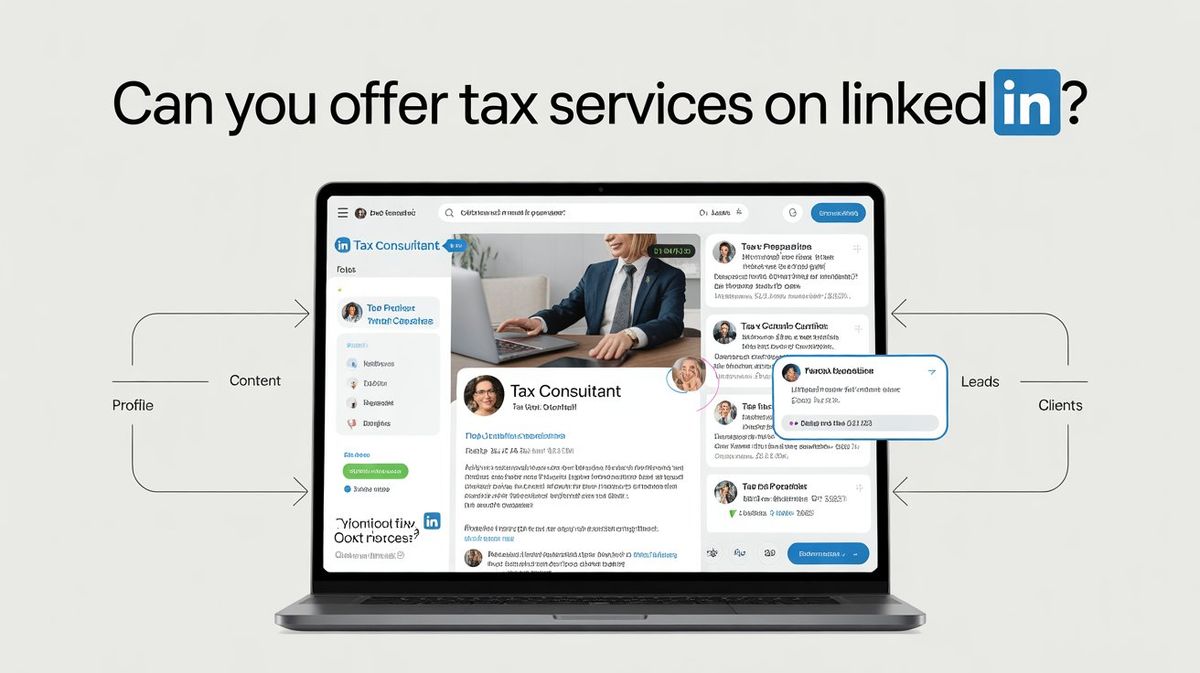
If you are a tax consultant, certified tax advisor, or accounting professional sitting in Islamabad, Karachi, or Lahore wondering whether LinkedIn can actually bring you real clients — the answer is a resounding yes. LinkedIn is not just a digital resume platform anymore. It has evolved into one of the most powerful business development tools available to tax professionals worldwide, including those based in Pakistan.
This guide walks you through everything you need to know about offering tax services on LinkedIn — from setting up a winning profile to generating consistent leads and building unshakeable credibility in a competitive market.
What Does It Mean to Offer Tax Services on LinkedIn?
Offering tax services on LinkedIn means using your LinkedIn profile, content, and network to attract individuals and businesses who need tax compliance, tax planning, FBR return filing, sales tax registration, corporate tax advisory, or audit representation services.
Unlike freelancing platforms such as Fiverr or Upwork, LinkedIn positions you as a professional authority rather than a gig worker. When someone hires you through LinkedIn, they are hiring a trusted tax expert — not the cheapest option in a marketplace. That distinction matters enormously for your rates and your reputation.
Tax professionals across Pakistan — from FBR-registered tax consultants to ACCA and ICAP-qualified accountants — are quietly building six-figure consulting businesses simply by showing up consistently and professionally on LinkedIn.
Is It Legal to Offer Tax Services on LinkedIn?
Yes, it is completely legal to market and offer tax advisory and consulting services through LinkedIn in Pakistan and internationally. LinkedIn's platform terms of service permit professionals to promote their services, provided you comply with your country's professional licensing requirements.
In Pakistan, the Federal Board of Revenue (FBR) does not restrict tax consultants from marketing their services on digital platforms. However, you must ensure you are registered and compliant with FBR regulations if you are preparing and filing tax returns on behalf of clients. If you hold qualifications such as CA (ICAP), ACCA, or a certified tax advisor credential, you should display these clearly on your LinkedIn profile to establish legitimacy.
For more context on FBR compliance requirements and how to stay legally compliant as a tax professional, read this detailed guide on income tax ordinance 2001 compliance.
Why LinkedIn Is a Gold Mine for Tax Consultants
Most tax consultants in Pakistan focus entirely on referrals or walk-in clients. This is a limited strategy. LinkedIn, by contrast, gives you access to over one billion professionals globally — including CFOs, business owners, HR directors, and startup founders who actively need tax help.
Here is why LinkedIn works specifically for tax professionals:
Decision-makers are already there. The people who hire tax advisors — business owners, company directors, finance managers — use LinkedIn daily. You do not need to chase them. You need to show up where they already are.
Content builds trust before the first conversation. When you share a post explaining how withholding tax applies to service payments in Pakistan, or how a business owner can reduce their advance tax liability legally, you are demonstrating expertise. Readers remember the expert who helped them understand something confusing. When they need to hire someone, they come back to you.
LinkedIn has built-in search. People search LinkedIn for "tax consultant Pakistan," "FBR tax filing expert," or "sales tax consultant Karachi" just like they search Google. If your profile is optimized with the right keywords, you appear in those results.
It works for both local and international clients. Whether you want to serve businesses in Islamabad or remote clients in the UAE, UK, or Canada, LinkedIn is the platform that bridges that gap. Many Pakistani tax professionals have built entirely remote international practices using LinkedIn alone.
How to Set Up a LinkedIn Profile as a Tax Consultant
Your LinkedIn profile is your digital office. Before you send a single message or post a single piece of content, your profile must communicate three things instantly: who you are, who you help, and why you are trustworthy.
1. Write a Keyword-Rich Headline
Your headline appears beneath your name everywhere on LinkedIn. Do not waste it by simply writing your job title. Instead, write a headline that tells visitors exactly what you do and who you serve.
Weak headline: "Tax Accountant at XYZ Firm"
Strong headline: "FBR Tax Consultant | Income Tax & Sales Tax Advisory | Helping Businesses in Pakistan Stay Compliant & Save More"
Your headline should naturally include phrases like tax consultant, tax advisory, FBR compliance, and your city or country. This is how LinkedIn's internal search algorithm surfaces your profile to people looking for tax help.
2. Optimize Your About Section
The About section is your chance to speak directly to a potential client. Write it in the first person, keep it conversational, and focus on the problems you solve — not just your qualifications.
Start with a hook: "Every year, thousands of Pakistani businesses overpay taxes or face FBR notices simply because they lack proper guidance."
Then explain what you do, who you work with, and what results you deliver. Mention specific services like income tax return filing, sales tax registration, corporate tax planning, NTN registration, audit representation, and FBR compliance. Sprinkle in keywords naturally — do not force them.
End with a clear call to action: "Send me a message if you want to discuss your tax situation."
3. Build a Strong Experience and Credentials Section
List every relevant role with details of what you actually did — not just your title. If you handled corporate tax compliance for manufacturing companies, say so. If you successfully resolved FBR audit notices, mention that.
Add your credentials clearly: CA (ICAP), ACCA, CPA, ICMA, or your Certified Tax Advisor certification. Credentials build immediate trust with potential clients who are evaluating multiple professionals.
If you are looking to add a recognized certification to your profile, consider the Certified Tax Advisor Course at ICT — one of the most respected practical taxation programs in Pakistan.
4. Use the Featured Section Strategically
The Featured section sits near the top of your profile and lets you highlight specific content. Use it to showcase:
- A downloadable tax guide you created
- A case study of a client you helped
- A video explaining a common tax issue
- A link to a blog post or published article
This section signals to visitors that you are an active, knowledgeable professional — not just someone with a LinkedIn account collecting digital dust.
5. Collect Recommendations
Ask three to five former clients or colleagues to write you a genuine LinkedIn recommendation. A recommendation from a business owner saying "Ali helped us reduce our tax liability by reorganizing our company structure" is worth more than any credential you can list.
What Services Can You Offer Through LinkedIn?
LinkedIn is suitable for marketing virtually any tax-related service. Based on what Pakistani tax professionals commonly offer, here are the most in-demand services you can promote:
Income tax return filing for salaried individuals, freelancers, and business owners. With FBR's active taxpayer list requirement, demand for this service spikes every filing season.
Sales tax registration and return filing for businesses that cross the taxable threshold. This includes STRN registration and monthly/quarterly return preparation.
NTN registration for new businesses and individuals entering the formal tax system.
Corporate tax planning and advisory for companies wanting to structure their finances tax-efficiently.
FBR audit representation for clients who have received notices under section 114 or other provisions. For more on how FBR audit notices work, read this FBR audit notice guide.
Tax compliance management for businesses that want ongoing support rather than one-time help.
International tax services including UAE VAT, UK taxation, Canadian GST/HST, and US taxation support for Pakistani freelancers and remote workers.
If you are looking to expand your service portfolio into international taxation — which is highly profitable — explore ICT's range of international tax courses including UAE Taxation, UK Taxation, Canadian Taxation, and US Taxation.

Can You Offer Tax Services on LinkedIn
How to Generate Tax Clients Through LinkedIn
Having a great profile is only half the battle. The other half is actively using LinkedIn to connect with potential clients and convert connections into paying customers.
Post Content That Solves Real Problems
The single most effective thing a tax consultant can do on LinkedIn is share genuinely useful content. Think about the questions your clients ask you regularly — then answer those questions publicly.
Post ideas that work well for tax professionals:
- "3 things every business owner in Pakistan must do before the FBR filing deadline"
- "Why your FBR filer status matters more than you think in 2026"
- "The difference between a tax filer and non-filer — and why it costs non-filers more money"
- "How a small restaurant in Lahore saved Rs. 400,000 in taxes with proper planning"
You do not need to post every day. Three to four times per week, consistently, is enough to build significant visibility over time.
Connect Strategically, Not Randomly
Do not connect with everyone. Focus your connection requests on people who might actually need your services: business owners, directors, CFOs, HR managers, startup founders, freelancers, and accountants who might refer clients to you.
Personalize every connection request with a short, genuine note. Something like: "Hi [Name], I noticed you run a business in the tech sector. I work with technology companies on FBR compliance and tax planning. I would love to connect."
This simple step dramatically increases acceptance rates and starts relationships on the right foot.
Use LinkedIn's Search to Find Prospects
LinkedIn's search bar is a powerful prospecting tool. Search for terms like "CEO Karachi," "Director Finance Lahore," or "startup founder Islamabad" and you will find hundreds of people who potentially need your services.
If you upgrade to LinkedIn Premium or Sales Navigator, you unlock advanced filtering that lets you target by industry, company size, location, and job title — dramatically accelerating your client acquisition.
Send Value-First Messages, Not Sales Pitches
When you reach out to a new connection, do not immediately pitch your services. Instead, share something useful. Link them to a relevant article, offer a quick observation about something in their industry, or ask a thoughtful question.
Build a little rapport first. Then, when the timing feels right, mention that you help businesses like theirs with tax compliance or planning and ask if they would be open to a conversation.
This approach feels human and respectful — which is exactly the tone that builds the kind of trust that turns a LinkedIn connection into a long-term client.
Building Trust and Authority as a Tax Professional on LinkedIn
Trust is the currency of professional services. Nobody hands their financial matters to someone they do not trust. LinkedIn gives you multiple tools to build that trust over time.
Share your credentials visibly. Make sure your certifications — whether that is your ACCA qualification, ICAP membership, or your Certified Tax Advisor certificate from ICT — are prominently displayed. LinkedIn has dedicated sections for licenses and certifications.
Comment on others' content with expertise. When someone posts about a tax question, a business challenge, or a financial topic, leave a thoughtful, knowledgeable comment. This puts your name and expertise in front of that person's entire network.
Publish long-form LinkedIn articles. LinkedIn allows you to publish full articles directly on the platform. Writing a 1,000-word article on "How Pakistani freelancers can legally reduce their tax burden in 2026" positions you as a genuine thought leader — and the article stays on your profile permanently as a reference piece.
Go live or post video content. Video humanizes you in a way that text cannot. Even a simple five-minute video explaining a tax concept builds far more trust than a written post on the same topic.
LinkedIn vs Other Platforms for Tax Professionals
Many tax consultants wonder whether to focus on LinkedIn, Facebook, Instagram, or traditional referral networks. Here is a straightforward comparison:
LinkedIn is the clear winner for reaching business decision-makers, establishing professional credibility, and attracting corporate clients. The average LinkedIn user has significantly higher income and professional seniority than users on other platforms.
Facebook and Instagram work better for reaching individual taxpayers and small business owners at a local level, but they lack the professional context that LinkedIn provides.
Traditional referrals remain valuable and should never be abandoned. But LinkedIn multiplies your referral network by making your expertise visible to people who have never met you in person.
For tax consultants targeting multinational companies, startups, or international clients, LinkedIn is simply irreplaceable.
LinkedIn Content Ideas for Tax Accountants and Advisors
Running out of ideas for what to post? Here are fifteen content ideas designed specifically for tax professionals:
- Explain a recent FBR update or notification in plain language
- Share a before-and-after case study of a client's tax situation (anonymized)
- Post a checklist of documents needed for income tax return filing
- Debunk a common tax myth in Pakistan
- Explain the difference between sales tax and income tax simply
- Share your personal journey into the tax profession
- Post a quick tip on how businesses can avoid FBR notices
- Explain what withholding tax is and who is responsible for it
- Share statistics about tax compliance rates in Pakistan
- Create a poll asking your network about their biggest tax challenge
- Explain how FBR's digital invoicing system works
- Share a tip for freelancers on managing their tax obligations
- Post about a career success story — a student who got hired after completing a tax course
- Explain the importance of maintaining the active taxpayer list status
- Share your take on how AI is changing the tax profession
For deeper insights on how artificial intelligence is reshaping taxation careers, read this analysis of AI's impact on tax consultants.
The Pakistan Tax Context: Why LinkedIn Matters More Now Than Ever
Pakistan's taxation landscape is undergoing a digital transformation. FBR's IRIS 2.0 portal, digital invoicing mandates, and expanded withholding tax provisions mean that businesses need more sophisticated tax guidance than ever before.
At the same time, Pakistan has a significant tax gap — millions of businesses and individuals who are not yet properly integrated into the formal tax system. This creates an enormous opportunity for qualified tax consultants who can position themselves as trustworthy guides through this complexity.
LinkedIn allows Pakistani tax professionals to reach not just local clients, but also the Pakistani diaspora in the UK, USA, UAE, and Canada who need tax advisory services spanning multiple jurisdictions. The freelancer tax compliance landscape in Pakistan alone represents a massive underserved market.
How ICT Prepares You to Offer Tax Services Confidently
Before you can offer tax services on LinkedIn, you need the knowledge and credentials to back up your profile. The Institute of Corporate and Taxation (ICT) — Pakistan's leading practical tax training institute — offers a comprehensive range of courses that equip you with exactly what LinkedIn clients expect from a serious tax professional.
ICT's Advanced Taxation and Litigation Course covers FBR compliance, audit defense, corporate tax planning, and litigation — everything you need to serve business clients confidently.
The Certified Tax Advisor Course is specifically designed to give you a recognized credential that you can proudly display on your LinkedIn profile, building immediate trust with potential clients.
For those looking to serve international clients, ICT offers specialized courses in UAE Taxation, UK Taxation, US Taxation, Canadian Taxation, and Saudi Taxation.
Students who graduate from ICT consistently report that their LinkedIn profiles with ICT credentials attract significantly more professional inquiries. To see what actual career transformation looks like after completing a tax course, read how our students transformed their careers with tax education.
Frequently Asked Questions
Can I legally offer tax consulting services on LinkedIn in Pakistan? Yes, absolutely. LinkedIn permits professionals to market their services on the platform. In Pakistan, as long as you are qualified and comply with FBR regulations, there are no restrictions on promoting tax services through LinkedIn or any other digital platform.
Do I need a certification to offer tax services on LinkedIn? While LinkedIn does not require a certification to list your services, having a recognized credential like CA (ICAP), ACCA, or a Certified Tax Advisor certificate makes your profile significantly more credible and increases the trust potential clients place in you.
How long does it take to get clients through LinkedIn? With a fully optimized profile and consistent posting, most tax consultants begin receiving meaningful inquiries within 60 to 90 days. Building a steady flow of inbound clients typically takes three to six months of consistent effort.
What type of clients can I attract on LinkedIn? LinkedIn is particularly strong for attracting corporate clients, startup founders, business directors, and international clients. For individual taxpayers, a combination of LinkedIn and Facebook tends to work better.
Should I have a personal profile or a company page on LinkedIn? For most independent tax consultants, a personal profile outperforms a company page in terms of reach and engagement. People hire people — not company logos. Build your personal profile first, and consider adding a company page later once your practice grows.
Is LinkedIn effective for tax consultants in cities like Lahore, Karachi, and Islamabad? Absolutely. Tax professionals across all major Pakistani cities — Islamabad, Karachi, Lahore, Rawalpindi, Faisalabad — are successfully using LinkedIn to attract both local and international clients. The platform works regardless of your city.
Conclusion: Your LinkedIn Tax Practice Starts Today
LinkedIn is not a future option for tax professionals in Pakistan. It is a present-day necessity for anyone serious about building a scalable, respected tax consulting practice.
The formula is straightforward: optimize your profile with the right keywords and credentials, post content that genuinely helps your target audience, connect strategically with the right people, and nurture those relationships until they are ready to hire you.
The tax professionals who start today will be the recognized LinkedIn authorities in their niche a year from now. The ones who wait will find themselves playing catch-up in an increasingly competitive digital market.
If you want to build the knowledge base that makes your LinkedIn profile truly credible — and gives you the confidence to serve clients at the highest level — book your seat in ICT's Advanced Taxation Course today. Visit ict.net.pk/courses to explore all available programs and take the first step toward building a tax consulting practice that attracts clients instead of chasing them.
Your expertise deserves a bigger audience. LinkedIn is where that audience is waiting.
Comments (0)
No comments yet. Start the conversation!
Leave a Reply
Your email address will not be published. Required fields are marked *