
How to Start a Tax Preparation Business: The Complete Step-by-Step Guide
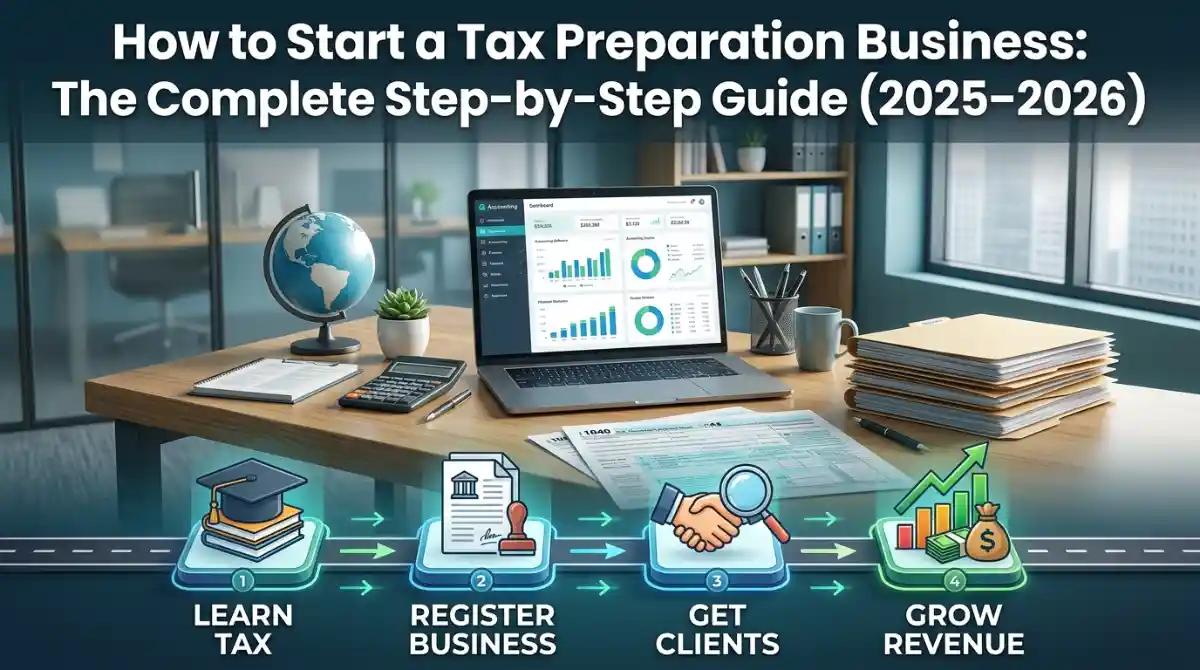
If you have ever thought about starting a tax preparation business, you picked the right time. With the IRS processing over 138 million tax returns annually and only around 131,000 tax preparation businesses operating across the United States, the demand is enormous — and the opportunity is wide open.
Whether you want to run a full tax office, launch a home-based tax prep service, or build a virtual tax preparation business that runs on autopilot, this guide will walk you through every single step. No fluff. No vague advice. Just a clear, honest roadmap from zero to a profitable tax prep firm.
What Is a Tax Preparation Business?
A tax preparation business is a professional service that helps individuals and companies prepare, calculate, and file their federal and state income tax returns. Tax preparers can work for themselves, run independent tax practices, or partner with larger firms.
The beauty of this business model is its flexibility. You can start it from home, go virtual, or open a physical tax office. You can serve individual clients filing Form 1040, small business owners filing Schedule C or Schedule E, or even corporations with complex tax situations.
Most importantly — you do not need to be a CPA to start. The minimum legal requirement in the United States is a Preparer Tax Identification Number (PTIN) from the IRS, which takes about 15 minutes to obtain online.
Why a Tax Preparation Business Is a Smart Move Right Now
The U.S. tax code changes every single year. With the IRS announcing the 2026 tax filing season opened on January 26, new deductions introduced under recent legislation, and millions of Americans still confused about their tax obligations, professional tax preparers will always have a seat at the table.
Here is why starting a tax business makes financial sense:
- Average cost of professional tax preparation is around $248 per individual return (National Association of Tax Professionals)
- A solo preparer handling 200–300 returns per season can generate $50,000–$75,000 in just three or four months
- Adding bookkeeping, payroll, and advisory services creates year-round, recurring income
- Startup costs are genuinely low compared to most businesses
If you are someone who is good with numbers, detail-oriented, and enjoys helping people solve financial problems, this is one of the most sustainable service businesses you can launch today.
Step 1: Understand the Legal Requirements Before Anything Else
Before you market a single service or file a single return, you need to get your credentials in order. Here is exactly what you need.
Get Your PTIN (Preparer Tax Identification Number)
The PTIN is the most fundamental requirement. Anyone who prepares or assists in preparing federal tax returns for compensation must have a valid PTIN issued by the IRS. You can apply through IRS e-Services in about 15 minutes. The current fee is $19.75, and it must be renewed annually. Every paid preparer in your firm must have their own PTIN — they cannot be shared.
Apply for Your EFIN (Electronic Filing Identification Number)
If you plan to electronically file 11 or more returns, the IRS requires you to become an Authorized e-file Provider and obtain an EFIN. This is separate from your PTIN. The EFIN application is submitted through the IRS e-Services portal, and the approval process can take over a month, so apply early. You will need a separate EFIN for each physical location from which you electronically file returns. Non-certified professionals must also submit fingerprints for an IRS suitability check.
Get Your EIN (Employer Identification Number)
Your EIN is your business's federal tax ID number. You will need it to open a business bank account, hire employees, and manage your firm's tax obligations. You can apply for one free directly through the IRS website.
Check State-Specific Licensing Requirements
This is where things get more nuanced. Some states have additional requirements beyond what the IRS mandates. For example:
- California requires a $5,000 tax preparer bond from an insurance company AND completion of a 60-hour course within 18 months of application (unless you are a licensed CPA or EA)
- Oregon, Maryland, and New York also have state-specific preparer registration requirements
Always check the IRS list of state requirements for tax preparers and contact your county clerk for any local business licenses or permits.
Step 2: Choose the Right Business Structure
How you register your tax preparation business affects your taxes, liability, and how clients perceive you. Here are your main options:
Sole Proprietorship / DBA (Doing Business As): The simplest setup. You file a DBA with your state and operate under a trade name. Low cost, but no liability protection.
LLC (Limited Liability Company): The most popular choice for new tax preparers. An LLC separates your personal assets from business liabilities, looks more professional to clients, and gives you flexibility in how you are taxed. You can even elect S Corporation taxation once your revenue grows, which can reduce self-employment tax significantly.
C Corporation: Generally not recommended for solo tax preparers starting out, but worth considering at scale.
Most new tax prep business owners start as a sole proprietorship or LLC. As your revenue grows, revisit the structure with a business tax advisor — ironically, the same advice you will be giving your own clients.
Step 3: Write a Solid Tax Prep Business Plan
A business plan does not have to be a 40-page corporate document. But you do need to answer some critical questions before you invest money into software, office space, or marketing.
Your tax prep business plan should cover:
- Your target market: Are you serving individual W-2 employees, self-employed freelancers, small business owners, or a specific niche like real estate investors or truck drivers?
- Your service offering: Will you focus purely on tax preparation, or will you also offer bookkeeping, payroll, or financial planning add-on services?
- Your pricing model: Flat fee per return, project-based pricing, or hourly rates?
- Your revenue projections: How many returns do you realistically need to break even in year one?
- Your marketing strategy: Referrals, social media, Google Business Profile, paid ads?
Firms that skip the business plan phase often find themselves overworked during tax season and underbooked the rest of the year. Define your "why" before you spend a single dollar.
Step 4: Set Up Your Office — Home, Commercial, or Virtual
One of the biggest advantages of starting a tax preparation business today is that you have complete flexibility in where and how you work.
Home-Based Tax Office
Starting from home is popular among new tax professionals because it keeps overhead costs extremely low. You will need a dedicated workspace, reliable computers, a professional-grade printer, a document scanner, and a separate business phone line and email address.
Security is non-negotiable. You are handling some of the most sensitive personal information that exists — Social Security numbers, financial records, bank account details. You must develop and follow a Written Information Security Plan (WISP), which the IRS strongly recommends for all professional tax preparers. This includes multi-factor authentication on all software, encrypted storage, and clear policies for how client data is accessed and destroyed.
Virtual Tax Preparation Business
A virtual or remote tax preparation setup is increasingly popular. With cloud-based tax software, a secure client portal, and remote electronic signature capability, you can serve clients across multiple states without ever meeting them in person. This is arguably the fastest-growing model for new tax preparers in 2025 and 2026.
Physical Tax Office
A brick-and-mortar location builds credibility fast, especially in local communities. However, it comes with rent, utilities, and staffing costs. Consider starting home-based or virtually, then transitioning to a commercial space once your client base justifies the overhead.
Step 5: Choose Your Tax Software Wisely
Professional tax software is not optional — it is the engine that runs your business. The wrong choice will slow you down. The right one will multiply your capacity and keep clients coming back.
Here are the leading professional platforms in 2025:
- Drake Tax Software — Widely trusted by independent preparers for its reliability and comprehensive state coverage. Known for fast processing and strong support.
- Intuit ProConnect / ProSeries — Popular among preparers who also use QuickBooks for bookkeeping clients.
- TaxAct Professional — A cost-effective option for small practices with a clean interface and solid e-filing capabilities.
- Wolters Kluwer CCH Axcess — Enterprise-grade, ideal for growing firms handling complex returns.
- TaxSlayer Pro — Budget-friendly with strong bank product integration, good for new preparers.
When evaluating tax prep software for your business, look for:
- E-filing and IRS compliance capabilities
- Integration with client portals and document management tools
- Data security features including encryption and multi-factor authentication
- Scalability to handle growth
- Bank product support (refund settlement banks) for offering refund transfers
AI tools for tax preparers are also rapidly entering the market. Platforms are beginning to automate data entry, flag errors, and assist with more complex return scenarios. Staying current with these tools will give your practice a competitive edge in 2025 and beyond.
Step 6: Build a Smart Pricing Strategy
One of the biggest mistakes new tax preparers make is underpricing their services. Here are the most common pricing models:
Per-Form Pricing: Charge a base fee for Form 1040 and add fees for each additional schedule (Schedule C, Schedule E, Schedule F, etc.). This is transparent and easy for clients to understand.
Flat Fee Packages: Create tiered packages — a basic individual package, a self-employed package, and a small business package. This makes it easier for clients to choose and easier for you to forecast revenue.
Project-Based Pricing: Each client engagement is quoted separately based on complexity. Works well for business tax preparation where returns vary significantly.
Retainer / Monthly Fee: Ideal for bookkeeping-plus-tax clients. A monthly retainer smooths out the seasonal income problem that affects most tax-only practices.
The national average for professional tax preparation is around $248 for an individual return. Small business returns typically start at $500–$800 and can go much higher. Do not compete on price — compete on trust, accuracy, and service quality.
Step 7: Market Your Tax Preparation Business
You can be the most skilled tax preparer in your city, but if nobody knows you exist, you will not get clients. Marketing is not optional.
Start With Your Network
Your first clients will almost certainly come from people who already know you. Tell everyone — family, friends, former colleagues, neighbors — that you have launched a tax preparation business. Ask for referrals. Set up a simple referral program: "Refer a friend and get $25 off your next return" goes a long way.
Claim Your Google Business Profile
This is free and incredibly powerful for local tax preparation businesses. A complete, optimized Google Business Profile will put you in front of people searching for "tax preparers near me" or "income tax preparation near me" in your city or neighborhood.
Build a Professional Website
Your website is your digital storefront. It should clearly explain your services, your credentials, your pricing structure, and how clients can get started. Include an FAQ section targeting common questions like "Do I need a CPA to get my taxes done?" and "How much does tax preparation cost?"
Leverage Social Media
Tax tips on Instagram, LinkedIn posts about common deductions, short educational videos on TikTok — these all build trust and authority in your local market. Building a tax brand on social media is one of the most cost-effective ways to attract new clients year-round, not just during tax season.
Partner With Complementary Businesses
Bookkeepers, financial advisors, real estate agents, and insurance brokers all work with clients who need tax help. Build referral relationships with these professionals. A single referral partner can send you dozens of clients per year.
Step 8: Create Efficient Operations and Scale
Once clients start coming in, operational efficiency determines how profitable your business actually becomes.
Document Your Workflow
Your tax preparation workflow should cover three core phases:
- Client intake: Requesting, receiving, and organizing documents
- Return preparation: Data entry, review, quality control
- Delivery and filing: Client approval, e-filing, payment collection
Document every step. When you hire your first seasonal tax preparer, they need to follow your process — not improvise their own.
How to Start a Tax Preparation Business in Pakistan (2026)

How to Start a Tax Preparation Business: The Complete Step-by-Step Guide
Capacity Planning
Capacity planning is the difference between scaling and burning out. Know exactly how many returns your team can realistically handle per week. If you know a new client represents 15–20 hours of work per season and your team only has 10 available hours, you need to hire before taking them on.
Running at 80% team capacity is healthier — and more profitable — than constantly working overtime.
Add Year-Round Services
The single biggest weakness of a pure tax preparation business is that revenue stops when tax season ends. Solve this by adding services your clients already need:
- Bookkeeping for small businesses
- Payroll services
- Tax planning and advisory
- Business formation and compliance
These services convert seasonal clients into year-round clients — and year-round clients are what make a tax business truly valuable.
What Certifications Can Elevate Your Tax Business?
While you only need a PTIN to legally prepare taxes, additional credentials significantly expand what you can do — and what you can charge.
Enrolled Agent (EA): Licensed at the federal level. An EA can prepare any type of tax return and, critically, can represent clients before the IRS in audits or disputes. This is the gold standard credential for non-CPA tax professionals.
Certified Public Accountant (CPA): Licensed at the state level. A CPA can provide broader financial services including auditing, financial statements, and full IRS representation. The CPA path requires accounting education, a licensing exam, and ongoing continuing professional education (CPE).
Annual Filing Season Program (AFSP): An IRS voluntary program that earns preparers a record of completion and limited representation rights. A good stepping stone for newer preparers.
Even without these designations, investing in continuing professional education keeps you current on tax law changes and makes you more valuable to clients year after year.
State-Specific Considerations
The requirements for starting a tax preparation business vary meaningfully by state. Here is a quick overview of some key markets:
California: Requires CTEC registration, a 60-hour qualifying education course, a $5,000 surety bond, and 20 hours of continuing education annually.
Texas, Florida, Arizona: No state income tax and fewer specific preparer regulations — making them relatively easy states to start a tax business in.
New York: Has its own registration requirements for paid preparers through the state's Department of Taxation and Finance.
Georgia, Illinois, Ohio: Follow federal IRS requirements without additional state-level preparer registration mandates, though local business licenses still apply.
Always verify current requirements with your state's tax authority, as these rules do change.
How to Use Technology to Run a Smarter Tax Business in 2025
The most successful tax preparation businesses today are not the ones with the lowest prices. They are the ones using technology to deliver a faster, smoother, more professional client experience.
Cloud-based tax software lets you access client returns from any device, anywhere. This is essential for virtual practices and multi-location firms.
Client portals allow clients to securely upload documents, review draft returns, and sign electronically — eliminating the need for in-person meetings for many clients.
Document management systems keep client files organized and searchable without physical storage costs.
AI-powered automation tools are beginning to handle routine data entry, flag potential errors, and even assist with more complex tax scenarios. Staying ahead of these tools — rather than fearing them — is what will separate leading preparers from the rest.
Cybersecurity tools including multi-factor authentication, encrypted file storage, and secure email are non-negotiable. A data breach is not just a legal liability — it will destroy client trust overnight.
How Much Does It Cost to Start a Tax Preparation Business?
Starting costs are genuinely manageable, especially if you begin at home:
- PTIN application: $19.75
- Professional tax software: $400–$2,000 per year depending on platform
- Business registration (LLC): $50–$500 depending on state
- Professional liability (E&O) insurance: $500–$1,500 per year
- Basic office equipment (computer, printer, scanner): $800–$2,000
- Marketing (website, business cards): $300–$1,000
- Continuing education: $200–$500 per year
Total startup range: approximately $2,300–$7,000 for a lean home-based launch. This is genuinely low compared to most service businesses.
Frequently Asked Questions
Do I need a CPA to start a tax preparation business? No. You only need a Preparer Tax Identification Number (PTIN) from the IRS to legally prepare federal tax returns for compensation. CPA, EA, and other designations are valuable but not legally required to start.
How much does it cost to start a tax preparation business? A lean home-based launch typically costs between $2,300 and $7,000, covering your PTIN fee, professional tax software, business registration, liability insurance, and basic marketing.
What is an EFIN and do I need one? An Electronic Filing Identification Number (EFIN) is required if you plan to electronically file 11 or more federal tax returns per year. You apply through the IRS e-Services portal. Approval can take over a month, so apply well before tax season.
Is a tax preparation business profitable? Yes. A solo preparer handling 200–300 returns per season at an average fee of $248 can generate $50,000–$75,000 in revenue in 3–4 months. Adding bookkeeping, payroll, and advisory services dramatically increases profitability and makes the income year-round.
How do tax preparers get clients? Most new tax preparers start through personal referrals. As the business grows, Google Business Profile optimization, a professional website, social media marketing, and referral partnerships with complementary businesses (bookkeepers, real estate agents, financial advisors) become the primary client acquisition channels.
What is the difference between a CPA and an Enrolled Agent? A CPA is licensed at the state level and can provide broad accounting and financial services. An Enrolled Agent is licensed at the federal level and specializes in taxation — including the right to represent clients before the IRS. For tax-focused practices, the EA designation is often more directly relevant.
Can I start a tax preparation business from home? Absolutely. Many successful tax firms started as home-based operations. With cloud-based tax software, a secure client portal, and proper cybersecurity measures, you can serve clients professionally without a commercial office.
How long does it take to get an EFIN? The EFIN application process typically takes four to six weeks. Submit your application well before the start of tax season — do not wait until January.
What software do I need for a tax preparation business? At minimum, you need professional tax preparation software that allows you to sign returns as a paid preparer and e-file as an Electronic Return Originator (ERO). Leading options include Drake Tax Software, Intuit ProConnect, TaxAct Professional, and TaxSlayer Pro.
How do I expand my tax business beyond tax season? Add year-round services: bookkeeping for small businesses, payroll processing, tax planning, and business advisory. These services convert one-time seasonal clients into retained clients who pay monthly throughout the year.
Helpful Tools to Support Your Tax Business
As you build your tax preparation business, using the right calculators and tools will make you more efficient and impress your clients. Here are some resources worth bookmarking:
- Pakistan Income Tax Calculator — Useful for understanding cross-border tax obligations for international clients
- Pakistan Business Tax Calculator — Helpful for assessing tax scenarios for South Asian business clients
- Pakistan Freelance Tax Calculator — Valuable if you serve remote workers or freelancers with international income
- PTA Tax Calculator — Useful for clients with imported assets
- Unit Converter — A handy general tool for international client work
Internal Resources From ICT
If you are looking to deepen your tax knowledge, build professional credentials, and serve clients across U.S., U.K., Canadian, UAE, or Saudi tax jurisdictions, the Institute of Corporate and Taxation (ICT) offers specialized training that goes well beyond basic tax preparation.
Some courses and resources worth exploring:
- Advanced Taxation and Litigation Course — Build litigation skills alongside tax filing expertise
- USA Taxation Course — Master IRS rules, deductions, and filing from a professional standpoint
- Certified Tax Advisor Course — Become a credentialed advisor capable of serving corporate clients
- UK Taxation Course — Expand your services to UK-based clients and expatriates
- Canadian Taxation Course — Serve the growing Canadian freelancer and diaspora market
- Master Sales Tax Course — Essential for any preparer working with business clients
- LLC Formation Course — Help your clients structure their businesses correctly from day one
ICT blogs also offer deep practical guidance on topics every tax preparer should understand:
- How to Become a Tax Accountant
- Tax Advisor Salary and Scope in Pakistan 2026
- How Tax Knowledge Helps You Start Your Own Consultancy
- Taxation Skills to Start Your Own Firm in 2026
- US Taxation Course Freelance Career Boost 2026
- How to Get Your First International Tax Client
- Software Tax Professionals Use
- Start Tax Freelancing Business in Pakistan
Conclusion: Your Tax Business Starts With One Decision
Starting a tax preparation business is one of the most accessible, low-risk, high-reward service businesses available today. The barrier to entry is genuinely low — a PTIN, some professional software, and a commitment to learning. The ceiling, however, is very high. Tax preparers who invest in credentials, systems, and year-round services build firms that generate significant income while helping real people navigate one of life's most stressful annual obligations.
The key is to start right. Get your PTIN and EFIN in order. Register your business as an LLC. Choose reliable professional tax software. Build your client base through referrals and digital marketing. Then expand — into bookkeeping, payroll, advisory — until your income is no longer seasonal.
Ready to take the next step? If you want to build professional-grade tax expertise that opens doors to U.S., U.K., Canadian, UAE, and international tax clients, book your seat at ICT's Advanced Taxation Course today. Real training. Practical skills. Career-ready results.
This article is for informational purposes. Tax regulations vary by state and jurisdiction. Always verify current IRS requirements and consult a licensed professional for advice specific to your situation.
Comments (0)
No comments yet. Start the conversation!
Leave a Reply
Your email address will not be published. Required fields are marked *